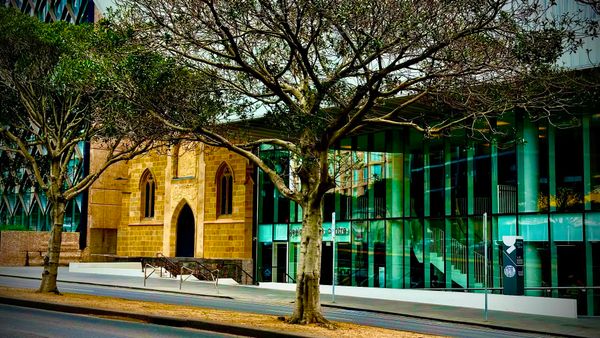
No. 1
A breakfast beside the fire, a walk along the bay and an exhibition that rewards a longer look.
THE LETTER
A different pace
There are places we stop seeing because we know where they are.
We know the turn, the parking and the quickest way from one thing to the next. We pass the same buildings and trees. We wait at the same corners.
Familiarity becomes a kind of speed.
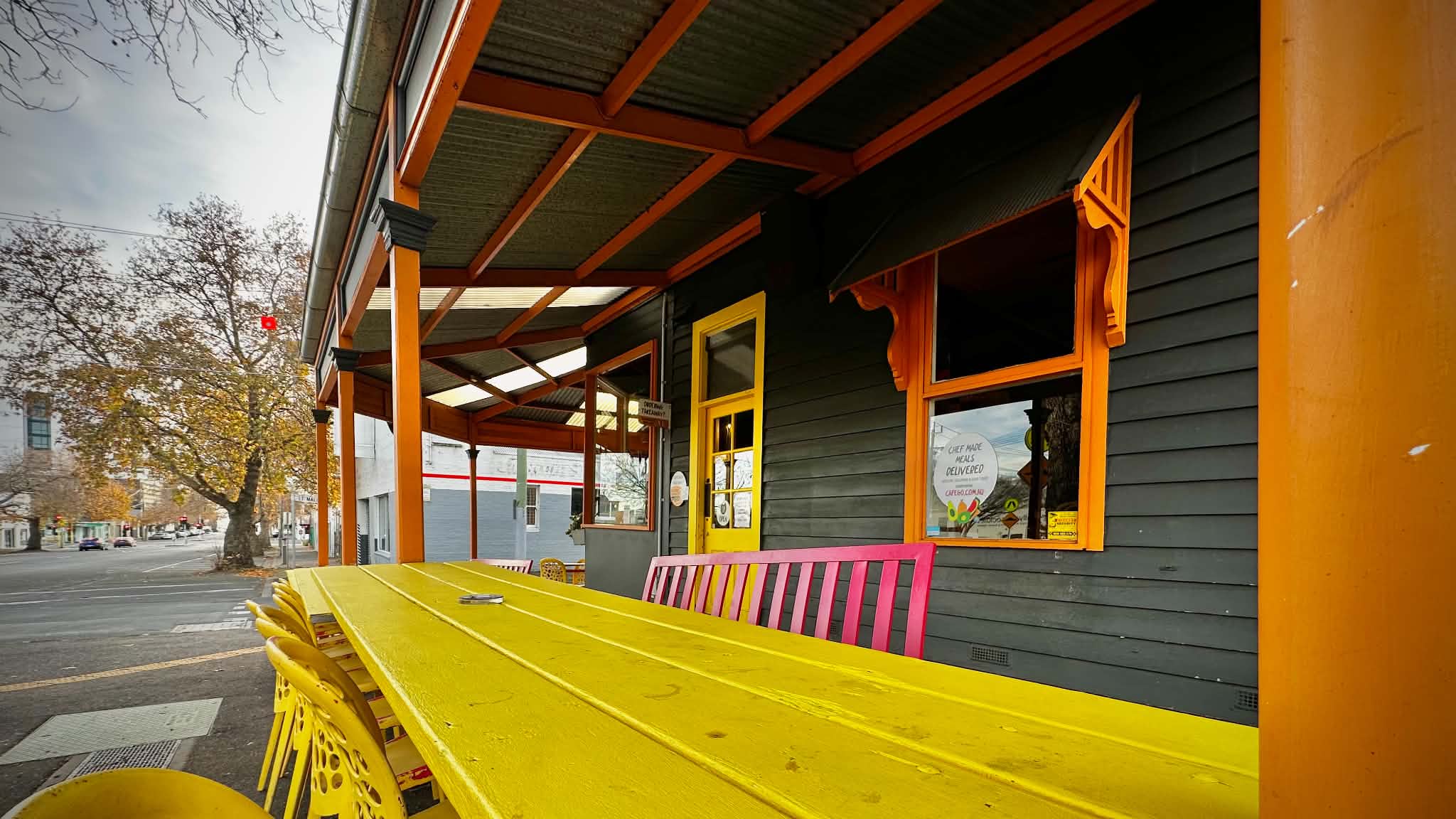
On Saturday morning, Jay and I stopped for breakfast in an old weatherboard house near the eastern side of central Geelong.
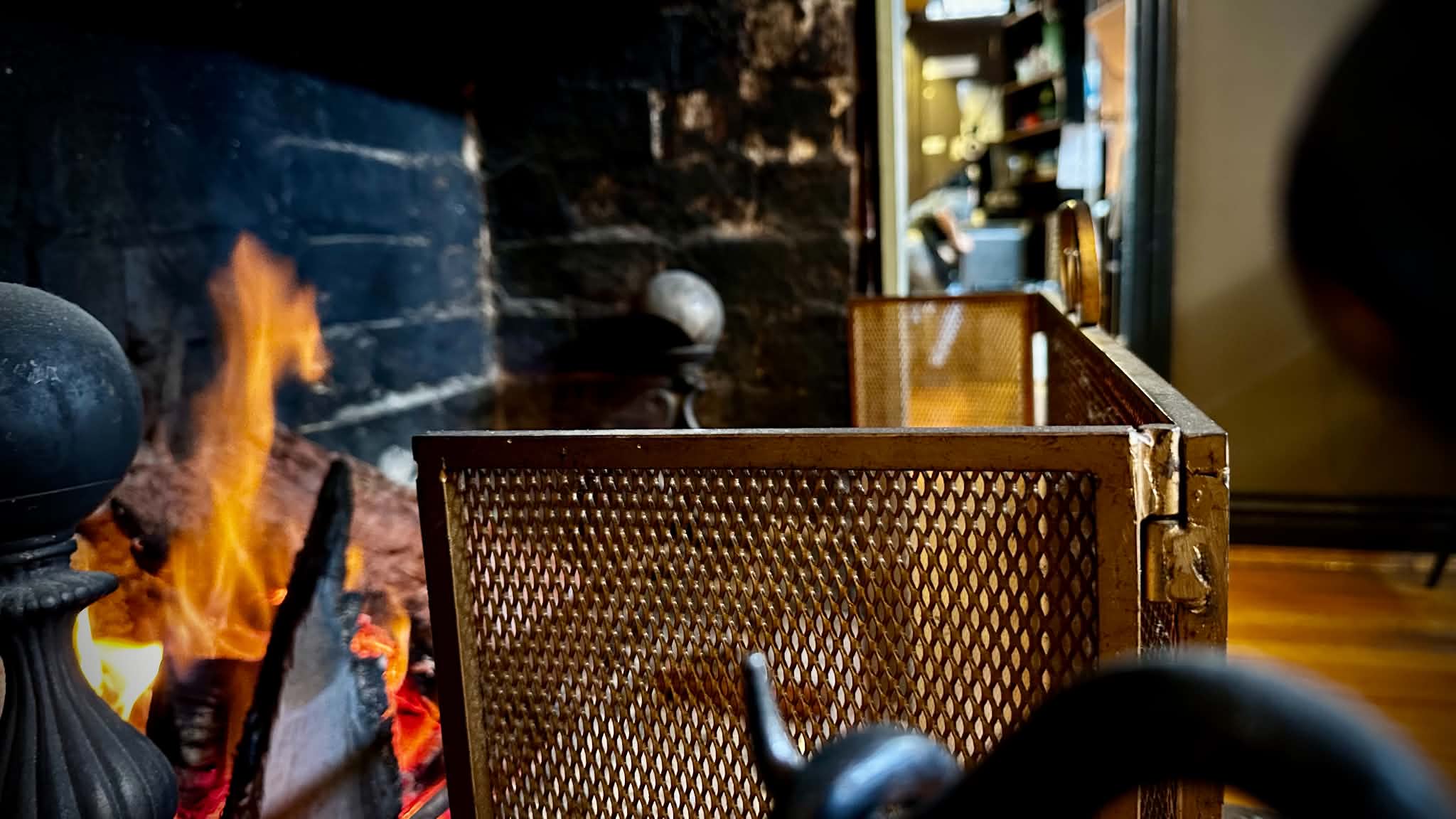
The room was warm. An enclosed wood heater stood beside us, and an open fire burned on the other side. The fireplaces were back to back, left from a time when a wall divided one room from another.
Two police officers came in for takeaway coffees. They spoke easily with the staff, collected their cups and returned to the street. Other people stayed. Some settled near the fire. Others moved through the old house towards the garden at the rear.
Nothing remarkable had happened.
The city was beginning its day, and people were moving through it at different speeds.
This first edition of The Geelong Letter follows a loose loop through central Geelong. It begins in the warmth of Café Go, moves towards Eastern Beach, then turns west along the bay. The path crosses Steampacket Gardens, passes the old Carousel and reaches Cunningham Pier before leaving the waterfront and continuing inland to Geelong Gallery. From there, Little Malop Street leads back towards Bellerine Street, with one small lane worth noticing along the way.
It is not a long journey. That is partly the point.
A place does not always come into view through its largest buildings or most familiar landmarks. Sometimes it appears through a room, a path or a small interruption: the fragrance of chai crossing a breakfast table, painted horses turning behind glass, a reflection held briefly in the water, or a painting that asks us to remain a little longer.
The Geelong Letter will not try to tell you everything happening in Geelong. There is already too much for that, and there are other publications better suited to the task.
Instead, each letter will offer a few ways into the city: somewhere to sit, somewhere to walk, something to notice and one or two things worth making time for.
The hope is modest. That you might see something you had passed before. That an ordinary morning might acquire another layer. That a familiar place might become briefly unfamiliar again.
Beyond the verandah, Bellerine Street continued towards the bay.
EAT
The room the fire remembers
In an old weatherboard house on Bellerine Street, a shared breakfast and the fragrance of chai brought the room into focus.
The fire was the first thing I noticed.
Café Go occupies a converted weatherboard house on the corner of Bellerine and Little Malop streets. It has been serving people from these rooms for more than three decades.
Inside, the old rooms have been opened into one another. The fireplaces remain back to back, marking where one room once ended and another began.
We sat beside the enclosed wood heater. On the other side, the open fire burned against the brick. A piece of timber shifted. A flame rose behind the guard and settled again.
The wall has gone.
The fireplaces still describe it.
Jay and I ordered two breakfasts to share.
The açaí bowl came with strawberries and banana, house-made granola, coconut chips and peanut butter sauce. Beside it were Belgian waffles. I had an oat milk latte.
Jay ordered the Calmer Sutra chai as a dirty chai. It was brewed in a pot with local honey, with a shot of espresso added.
The drinks came first, then the food.
The fruit was cold. The granola broke beneath the spoon. Peanut butter ran through the açaí in pale ribbons. The waffles were warm and soft, and we moved between the two plates without deciding which belonged to whom.
The fire was close enough to feel at my side.
A few minutes into breakfast, the chai reached me across the table.
Honey and spice came first, with the darker note of espresso underneath. I looked up and saw the small pot beside Jay’s hand.
Its fragrance settled into the warmth of the fire.
Until then, I had been eating a good breakfast in a comfortable room. The chai made me notice the whole place.
There was the fire against the brick. The cold fruit and the warm plate. The dark coffee. Jay across the table. The old rooms opened into one another.
The separate parts of the morning seemed to belong together.
Around us, the café continued its work.
Two police officers came through the front door for takeaway coffees. There was a brief exchange at the counter. They collected their cups and left. Other customers settled at tables while staff moved between the counter, kitchen and garden.
Some people had time to sit beside the fire. Others had time only to wait for a cup.
The building seemed able to accommodate both.
At the back, the old house opens into a garden of bamboo, painted furniture, stacked timber and objects accumulated over time. It does not appear to have been completed all at once. The rooms and garden carry the marks of use: worn surfaces, additions, changes of colour, wood waiting for the fire.
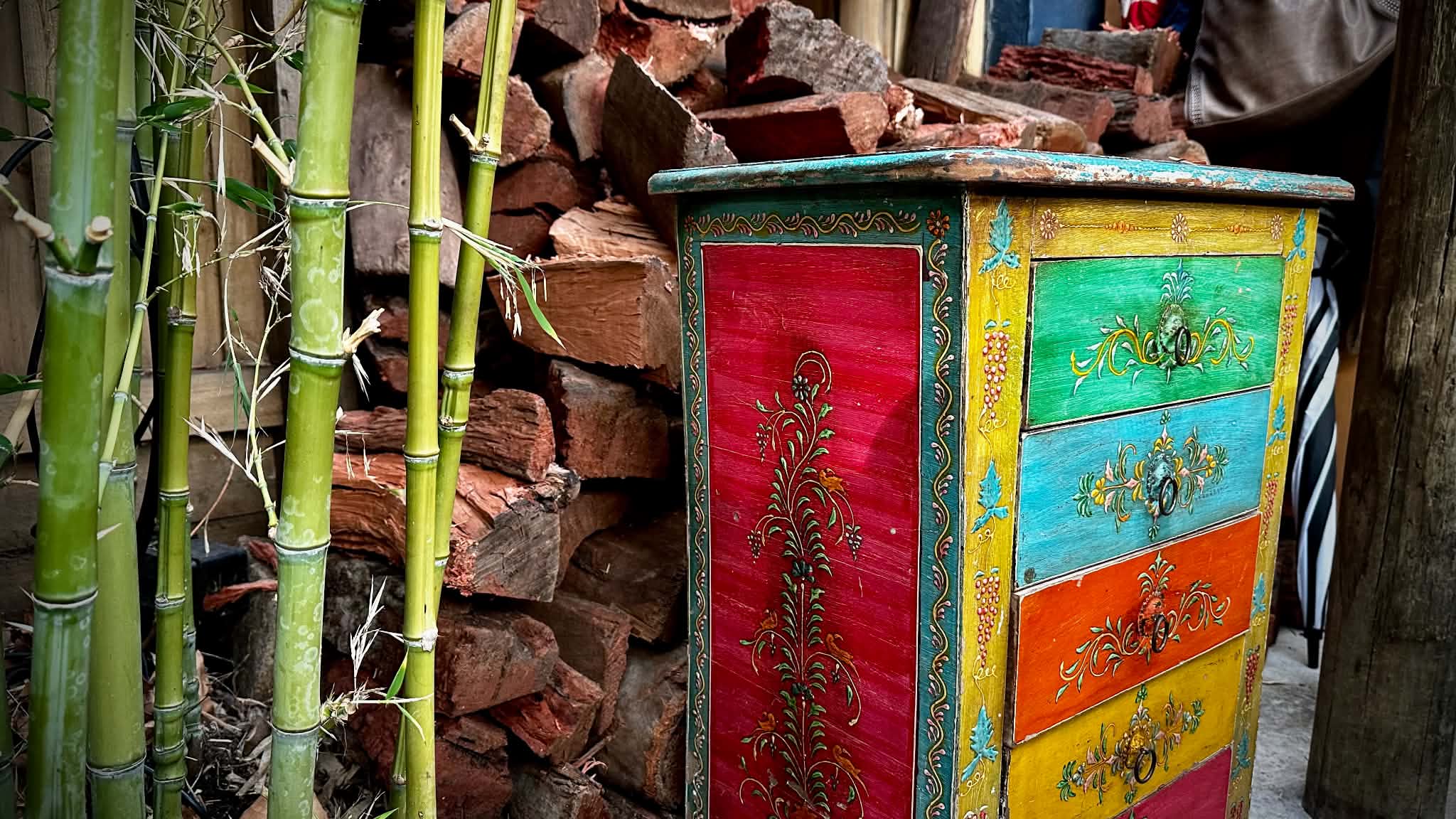
There are cafés designed to look finished from the day they open.
This one feels lived in.
We finished the waffles and worked through the last of the fruit and granola. The coffee cooled. The chai pot emptied.
By the time we stood to leave, its fragrance had faded.
The fire was still burning.
WALK
Where the bay gives way to the city
From Eastern Beach to Geelong Gallery, the city gathers gradually around the water.
From Café Go, make your way towards Eastern Beach and begin beside Pavilion.
Do not turn west immediately.
Walk down towards the water first.
White railings trace the slope. Palms rise above the lawns. Beyond them, the bathing enclosure curves into Corio Bay, holding one body of water inside another.
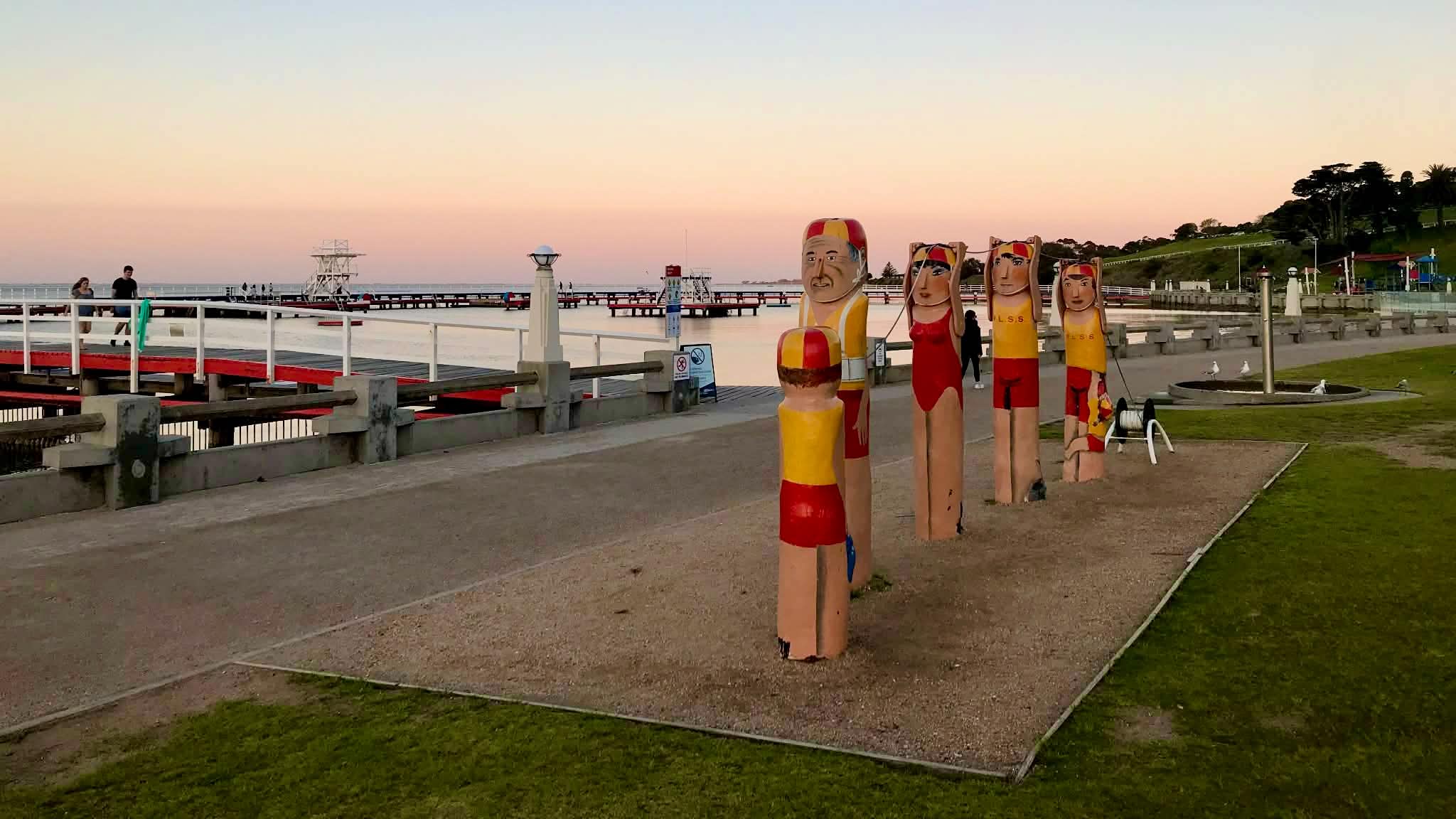
In summer, people occupy much of the view. In winter, the structures become easier to see: the boardwalk, diving tower, ladders and long horizontal lines of the enclosure.
Stand there for a moment, then turn west.
At first, the bay holds most of the view.
The path follows the curve of Eastern Beach. The wind comes more directly from the water here than it does among the streets.
Behind you are the sea baths and palms. Ahead, boats and masts begin to gather.
The change is gradual.
Near the Royal Geelong Yacht Club, the waterfront becomes a working edge again. Lines hold boats in place. Masts divide the sky.
Wangim Walk extends over the water beside the yacht club. Take the detour when it is open and the weather suits. From farther out, the separation between water and city becomes clearer: boats close at hand, the shoreline behind them and buildings rising beyond.
Return to the main path and continue west.
The lawns open into Steampacket Gardens.
People cross between the city and the waterfront carrying coffee, walking dogs or moving towards the bay. Painted bollards stand beside the path, bright against the grass. They are part of the visual rhythm of the gardens rather than something that must all be explained.
The city now keeps closer company with the water.
Roads become more present. Buildings rise behind the lawns. The open shoreline begins to feel like a civic space again.
Beyond the gardens, the Carousel appears behind glass.
Painted horses rise and fall beneath rows of lights. From the path, the movement is briefly visible, then partly lost again behind reflections from the waterfront.
When it is running, the music reaches the path before every detail inside becomes clear.
The Carousel was built around 1892 and restored as part of Geelong’s waterfront redevelopment.
It is an unexpected interruption: carnival colour beside the water, painted horses travelling in circles while walkers and cyclists continue along the shore.
Continue west. Cunningham Pier comes into view ahead.
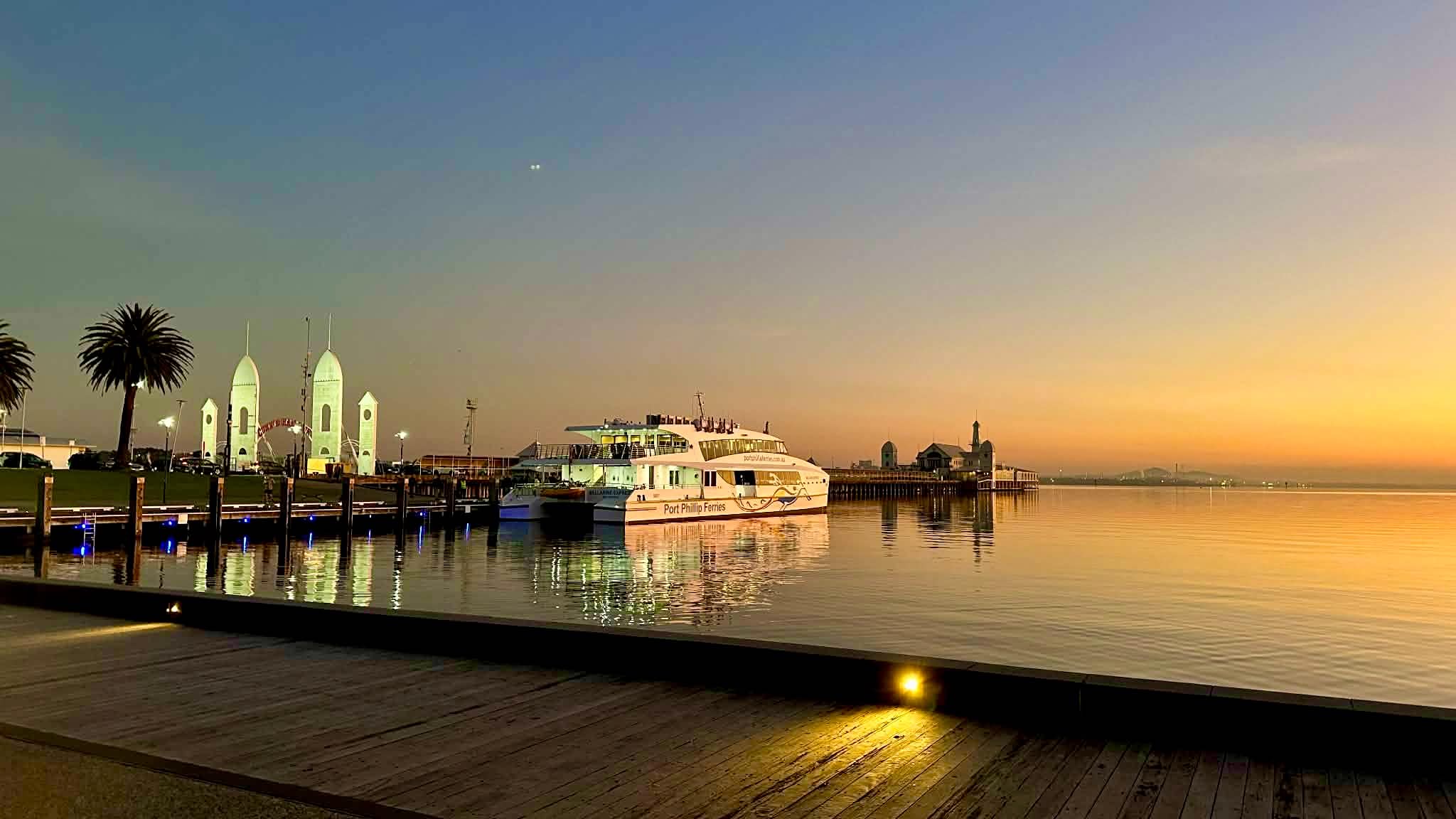
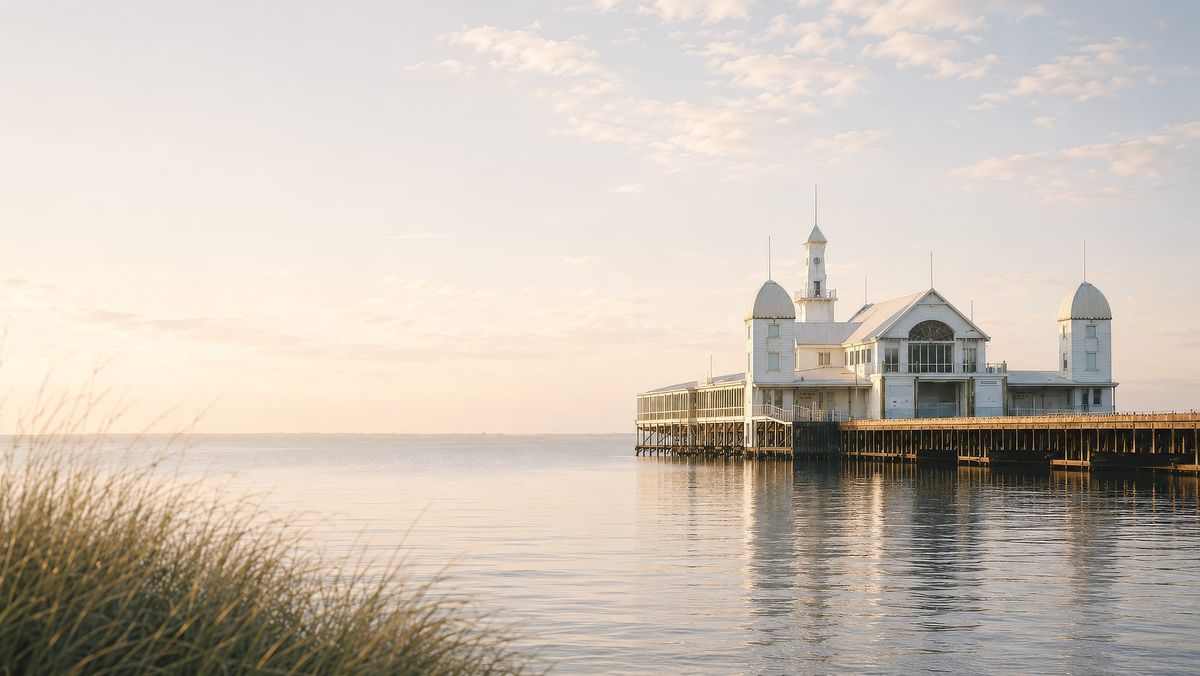
Its white building, towers and long horizontal face extend over the water. Beneath them, the timber and pylons form darker lines.
Walk some distance onto the pier if access allows.
Then turn around.
From there, the city appears differently. The bay is in front of it rather than beside it. The Carousel sits low along the shoreline. The palms and bathing enclosure have receded towards the east. Much of the walk can be understood in one view.
Return to the shore.
This is where the route leaves the waterfront. The bay remains visible for a little longer, then begins to appear only between buildings. The wind loses some of its force. The scale of the walk contracts.
Continue inland towards central Geelong. The ground begins to rise slightly. The air becomes less exposed, the open sky narrows between buildings, and the water gradually disappears from view.
By the time you reach Johnstone Park, the character of the walk has changed again.
The grass and mature trees create a final pause between the waterfront and Geelong Gallery.
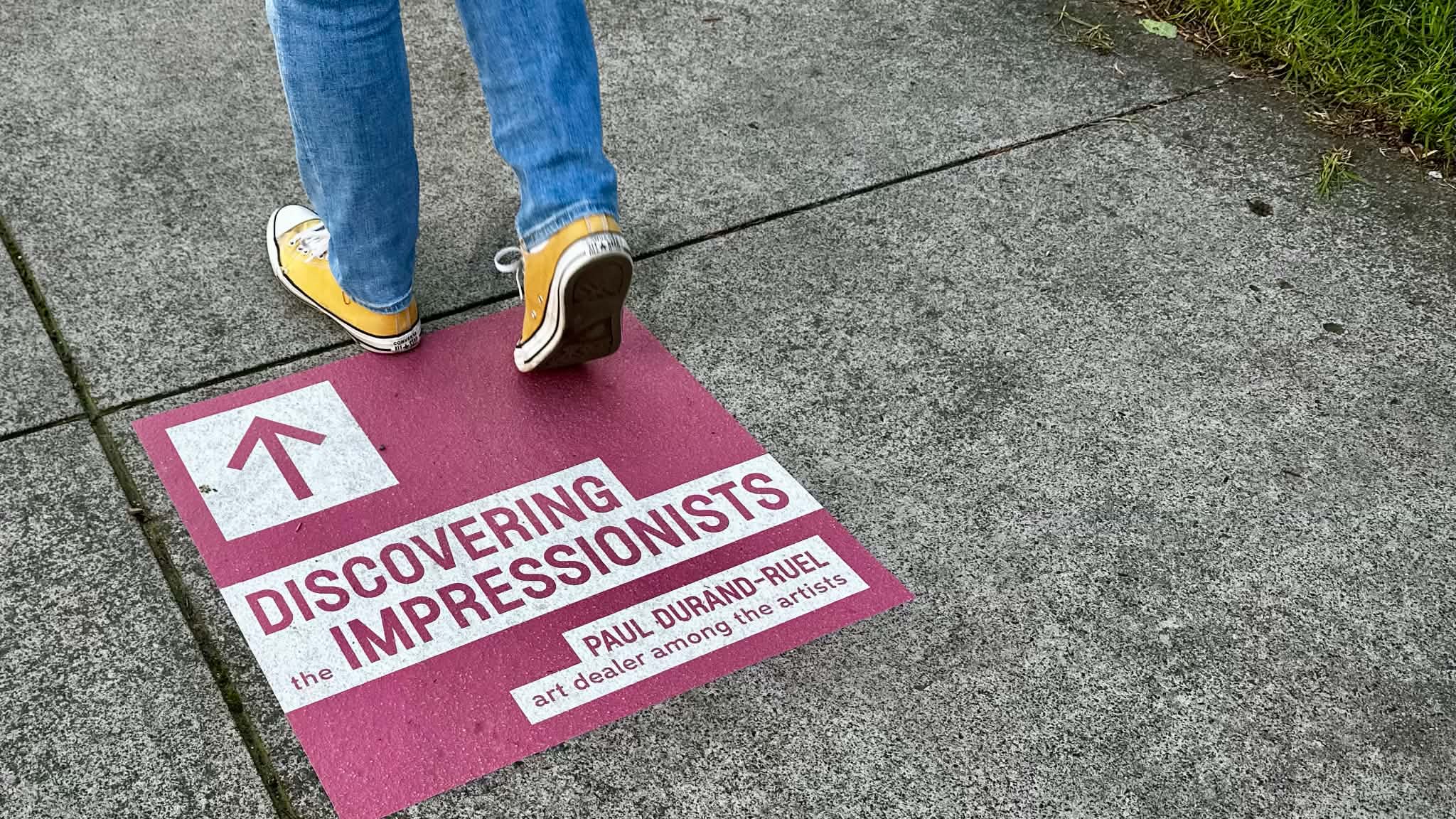
Outside the Gallery, a large magenta square has been fixed to the pavement.
An arrow points towards the entrance.
The walk ends here.
The looking is about to begin.
MAKE TIME FOR
Discovering the Impressionists
At Geelong Gallery, the story of Impressionism is also the story of the dealer who stood behind it before the wider public did.
Outside Geelong Gallery, the instruction is direct.
A white arrow points towards the entrance. Beneath a pair of yellow shoes, the exhibition title fills a magenta square: Discovering the Impressionists.
Inside, Geelong Gallery has been remade for the exhibition.
The familiar white walls are gone. One room is deep red; others use softer but equally deliberate colours. Gold frames catch against them, and open doorways allow one painting to be seen from the next room.
The effect is immediate. The paintings no longer seem to float in neutral space. They belong to a sequence of rooms.
But this exhibition is not only about the painters.
It is also about the man who helped the public see them.
Paul Durand-Ruel was an art dealer. When Monet, Renoir, Pissarro and their peers were still being mocked and struggling to sell their work, he bought it.
He supported the artists, organised exhibitions and introduced their paintings to audiences in Europe and America. He did this before success was assured.
Over his lifetime, Durand-Ruel bought and promoted more than 12,000 paintings.
That sustained belief sits at the centre of Discovering the Impressionists: Paul Durand-Ruel, Art Dealer Among the Artists.
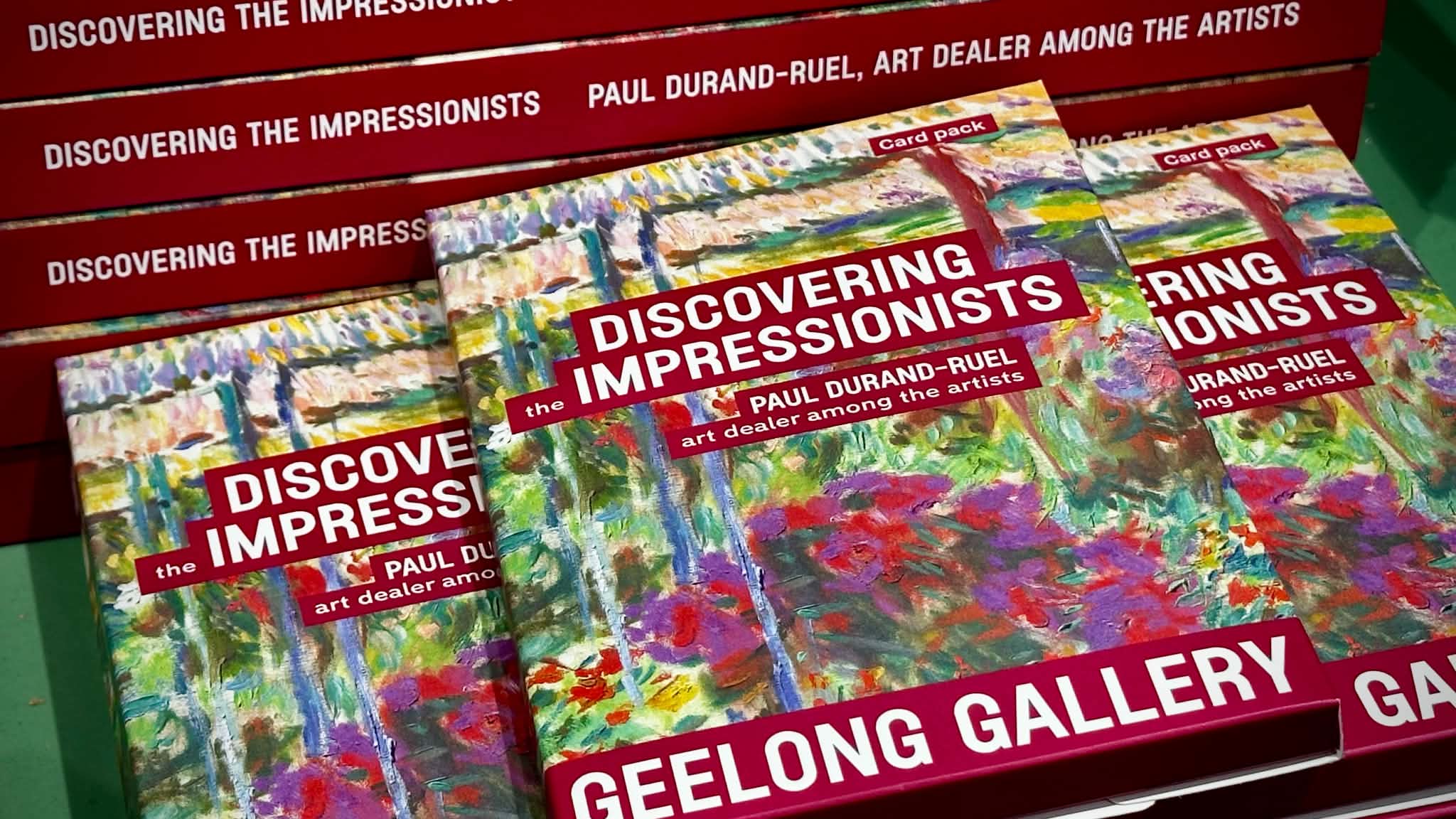
Across five galleries are more than 70 works, many from private collections in France and shown in Australia for the first time.
Monet, Renoir, Berthe Morisot and Camille Pissarro are here. So are painters of a later generation whom Durand-Ruel also supported.
The famous names will naturally draw the first glance.
Let them.
Then keep looking.
One of the pleasures of the exhibition is moving between what you already know and what you do not. A familiar Monet may bring you into a room. A less familiar painter may be the one you remember afterwards.
Large exhibitions can make us hurry.
There are labels to read, names to recognise and rooms to complete. After a while, looking can begin to feel like a task.
It does not have to.
Choose a few paintings and give them time.
Stand in front of one before reading the label. Move closer and notice the surface. Step back and see how the colours gather.
Return to one before you leave.
That is enough.
Durand-Ruel’s importance was not only that he recognised artists who later became famous. He stayed with them while their work was still uncertain, unpopular and difficult to sell.
The exhibition asks for a smaller version of that patience from us: stay with a painting a little longer than you normally would.
When you leave the Gallery, the route turns east again.
Little Malop Street leads back towards Bellerine Street, and one of its smaller openings is worth a pause.
NOTICE
What the walls keep
On the return towards Bellerine Street, a small lane carries several layers of the city at once.
Dennys Place opens off Little Malop Street.
At 1 Dennys Place, the lane does not present itself as somewhere to stop.
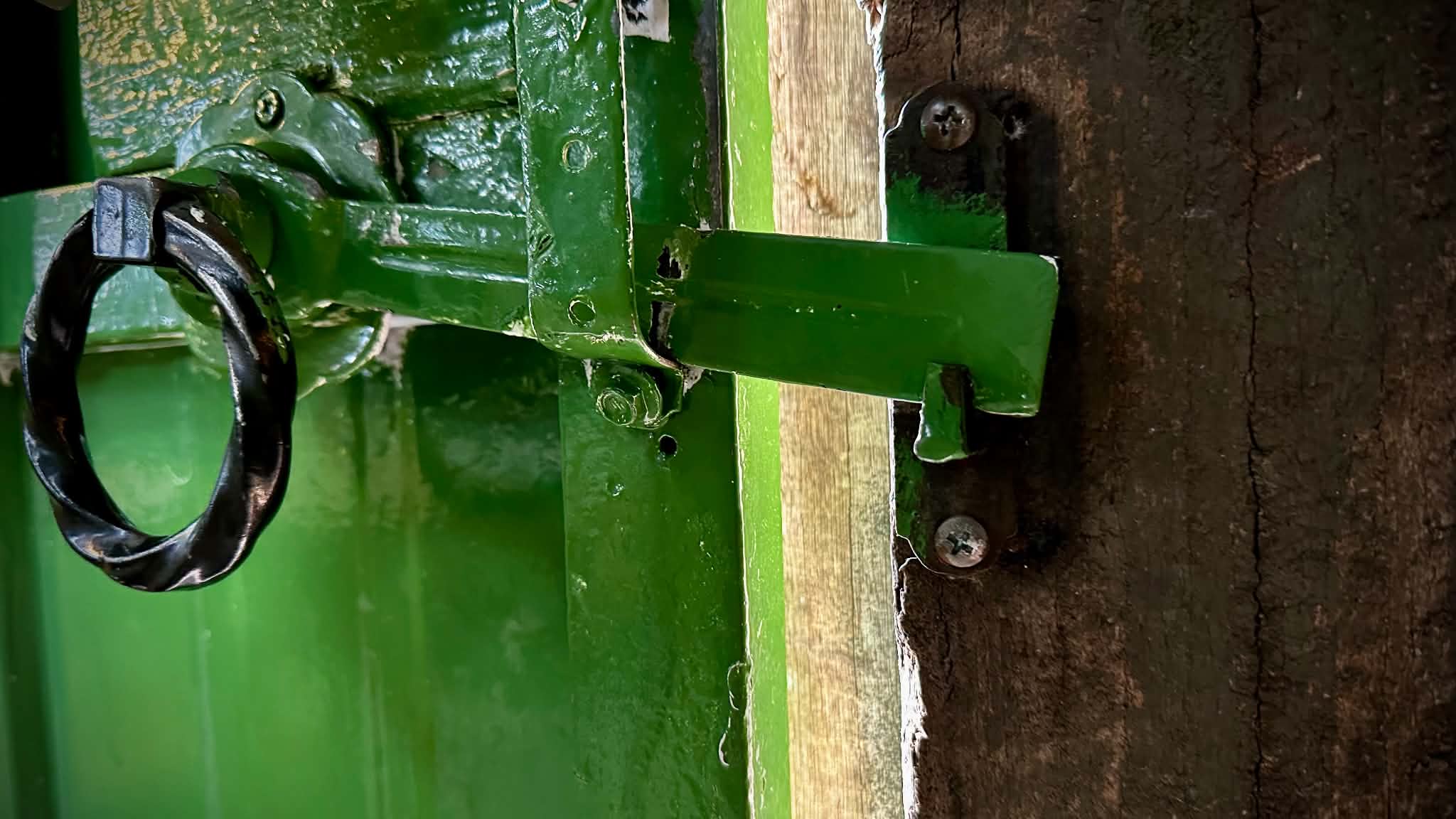
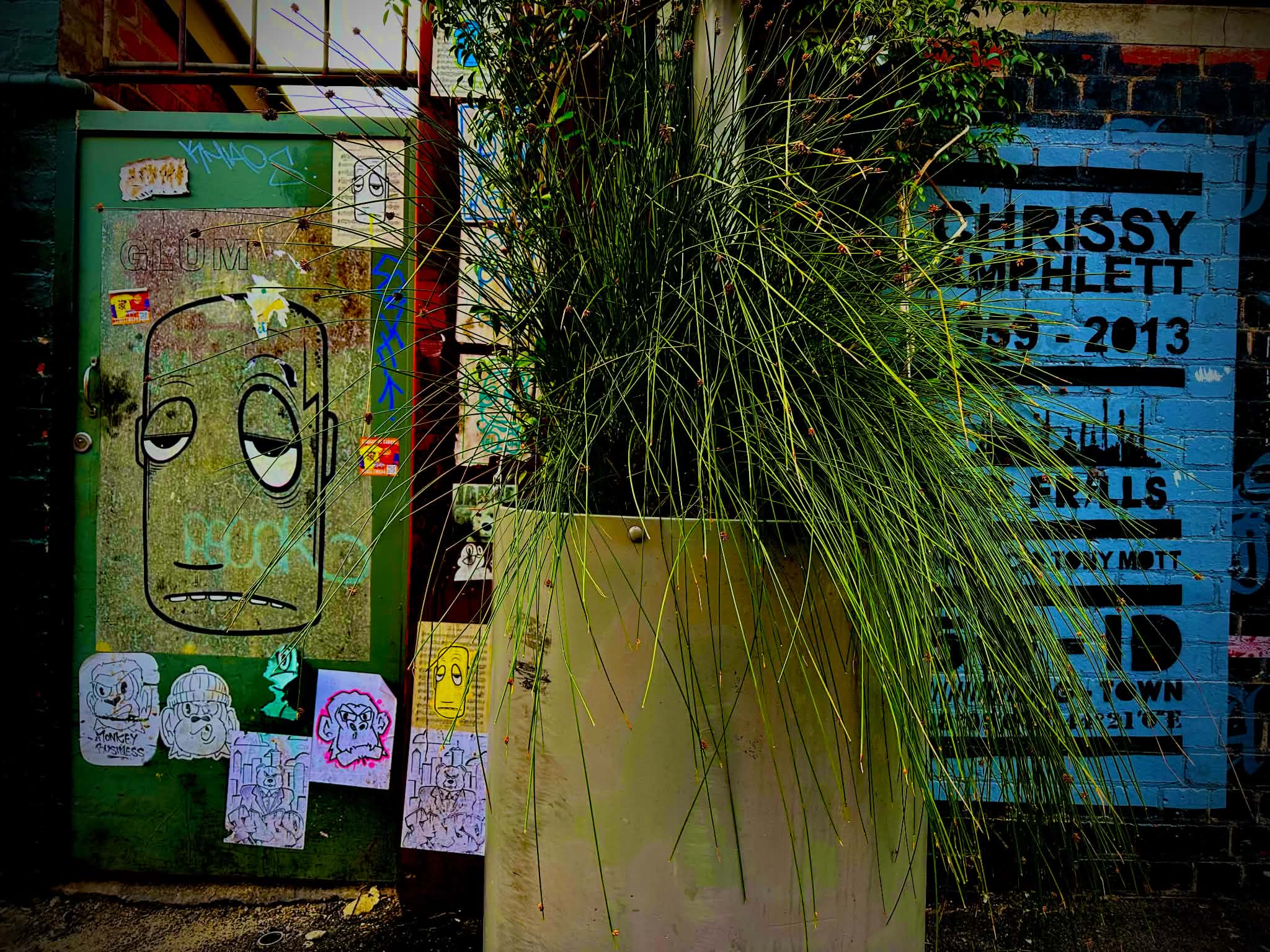
A green door carries layers of paint, stickers and drawn faces. Beside it, long stems spill from a planter and cross the wall in front of faded lettering. Some marks appear deliberate. Others seem to have accumulated through weather, repair and use.
Nothing has been arranged for viewing.
That may be why it rewards attention.
Geelong is often seen through its open water, civic buildings and broad streets. The lanes hold another record.
Paint is covered and uncovered. Posters are pasted over older posters. A door becomes a surface for someone’s quick drawing. Plants grow across words that may once have been easy to read.
The eye begins to separate the layers.
There is the blue brickwork. The green door. Black lettering partly hidden by leaves. Small faces attached near the ground. A larger face drawn directly onto a worn panel.
The lane has not been preserved as a single moment.
It carries several moments at once.
Not every local detail needs a plaque or a complete explanation. Sometimes the value lies in seeing what remains before it is painted over, repaired or replaced.
Return to Little Malop Street and continue towards Bellerine Street.
The loop closes quietly, not far from where breakfast began. The city is unchanged. What has changed is the attention brought to it.
GOOD TO KNOW
Café Go
Where: 37 Bellerine Street, Geelong, on the corner of Little Malop Street.
Hours: Monday to Friday, 7.00 am–4.00 pm; Saturday, 8.00 am–4.00 pm; Sunday, 8.00 am–2.00 pm. Café Go closes on public holidays.
Bookings: Walk-ins are encouraged. Bookings are taken for groups of more than five by phone or email.
Breakfast: The breakfast menu is available from opening until 3.00 pm. Check the current menu and hours before setting out.
Access: Café Go occupies a converted older house. Contact the café directly if step-free entry, bathroom access or a particular table arrangement is important.
The four-kilometre loop
Start and finish: Café Go, at the corner of Bellerine and Little Malop streets.
Route: From Café Go, continue towards Eastern Beach. Follow the waterfront west through Steampacket Gardens, past the Carousel and Cunningham Pier, then turn inland towards Johnstone Park and Geelong Gallery. After the exhibition, return east along Little Malop Street, passing Dennys Place before reaching Bellerine Street again.
Distance: Approximately four kilometres for the complete loop: about three kilometres from Café Go via Eastern Beach and the waterfront to Geelong Gallery, then roughly one kilometre back to Bellerine Street.
Allow: About an hour for the walking itself at an easy pace. Allow longer for pauses at Eastern Beach, Wangim Walk, Steampacket Gardens, the Carousel, Cunningham Pier and Dennys Place, plus around an hour inside the exhibition.
Surface: A mixture of city footpaths, timber boardwalk and sealed waterfront paths. The waterfront section is predominantly level. From Cunningham Pier, the route rises gently towards Geelong Gallery; the incline is modest but may be noticeable.
Facilities: Public toilets, picnic facilities, playgrounds and walking paths are available at Eastern Beach Reserve.
Weather: The waterfront is exposed to wind from Corio Bay. In winter, take another layer even when the central streets feel sheltered.
Optional detour: Wangim Walk adds a short on-water diversion beside the Royal Geelong Yacht Club. Check current access before setting out.
Return: After leaving Geelong Gallery, follow Little Malop Street east towards Bellerine Street. Dennys Place opens just off the route and provides the final small discovery before the loop closes.
Geelong Gallery
Exhibition: Discovering the Impressionists: Paul Durand-Ruel, Art Dealer Among the Artists
Dates: Saturday 20 June to Sunday 11 October 2026.
Where: Geelong Gallery, 55 Little Malop Street, Geelong.
Hours: Daily, 10.00 am–5.00 pm. Last entry is at 4.00 pm. Tickets are issued in 20-minute entry intervals.
Tickets: Adult $29; concession $25; child aged 5–15 $15; Geelong Gallery member $22; children under five free. Family, group, Tuesday seniors and Companion Card options are also available.
Best time: The Gallery recommends allowing around an hour. Afternoons after 2.00 pm are generally quieter, and advance online booking is recommended.
Getting there: The Gallery is about a three-minute walk through Johnstone Park from Geelong railway station. Street parking is available nearby, with additional parking at the Civic Centre car park.
Access: All Gallery spaces are accessible to people using walking frames or wheelchairs. Wheelchairs may be borrowed without charge, and accessible parking is available on Little Malop Street. Large-font exhibition label booklets are available to borrow.
Thank you for reading the first edition of The Geelong Letter.
I hope something here gives you a reason to pause, look again or take the longer way around.
Until next time, Graeme.