No. 2
A bowl of pho, a less direct walk through the city and an old church preparing for a new life.
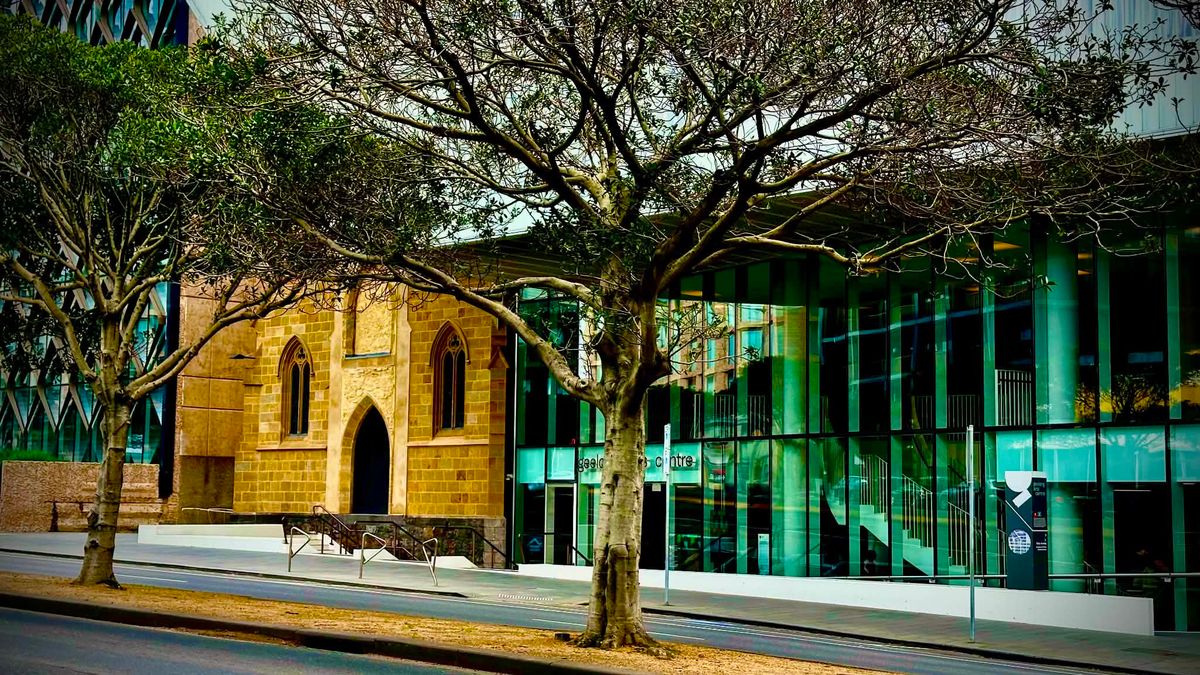
THE LETTER
Before the doors open
When Jason and I first came across Geelong Arts Centre, the new Little Malop Street facing buildings were still under construction.
We had recently moved to Mount Duneed. A walk through Johnstone Park brought us to the building site, and we stopped to look. We had no idea what this was, but we knew we wanted to be part of it
At that point, we knew very little about the Geelong Arts Centre or the city around it. We were still learning where things were, which streets led where, and what might eventually begin to feel like home.
Later, Jason and I became part of Church’s next chapter through Geelong Arts Centre’s Name a Seat campaign.
Our dedication reads:
Our 5-Year Mission, NgamBaker
The words are playful. They borrow from Jason’s affection for Star Trek: The Next Generation and its promise of exploration. But they also say something true about the way we have come to know this city: slowly, through rooms, streets, performances, meals and the decision to keep turning up.
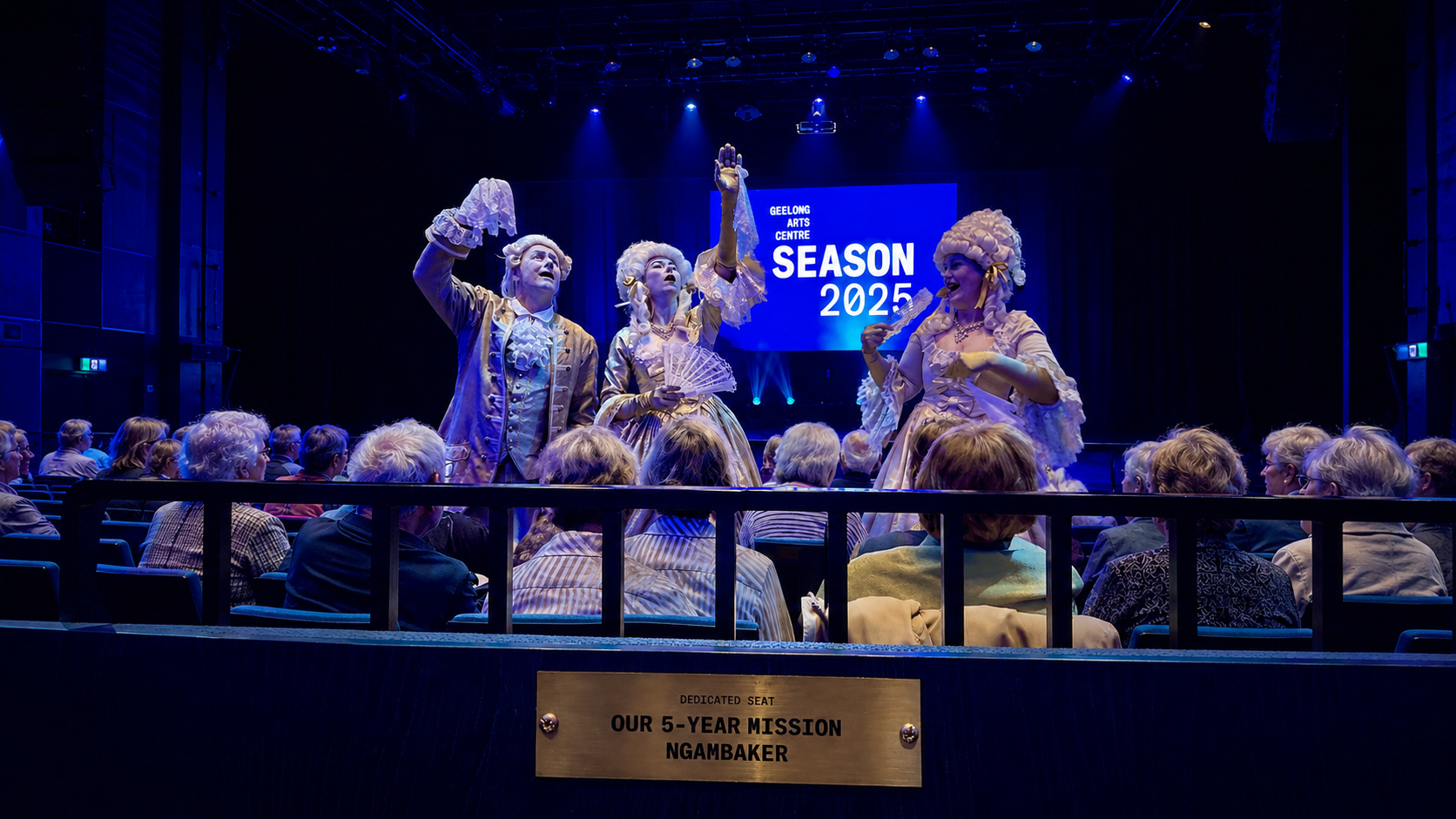
The seat is not inside Church. It is elsewhere in Geelong Arts Centre, in a room where we have already watched audiences gather, performers arrive and the lights come up.
Church offers a different kind of room.
It is smaller. Closer. Older in its fabric and new in its purpose.
The former Ryrie Street Presbyterian Church has already lived several lives. It has held worship, temperance meetings, theatre and rehearsal. Now it is being returned to public use as an intimate performance venue for music, comedy, theatre and other work.
We have watched Geelong Arts Centre become part of our own life in this city. Church now opens another door, not only for audiences, but for artists who need a room of this scale: a place to try work, gather people and begin.
So this edition takes the long way there.
We begin at Pho Downtown in Warner Place. We go underground for books, pass the painted face in Minns Lane, cross into Centrepoint Arcade and climb the green-lit stairs to Popcultcha Records.
Then we return to Ryrie Street.
At the end of the walk stands an old stone building preparing for its next audience.
For now, the room is waiting.
EAT
A Table in Warner Place
But before we set out, there is a bowl that deserves its due.
Pho Downtown does not sit on a grand frontage. You turn into the lane because you know there is something there.
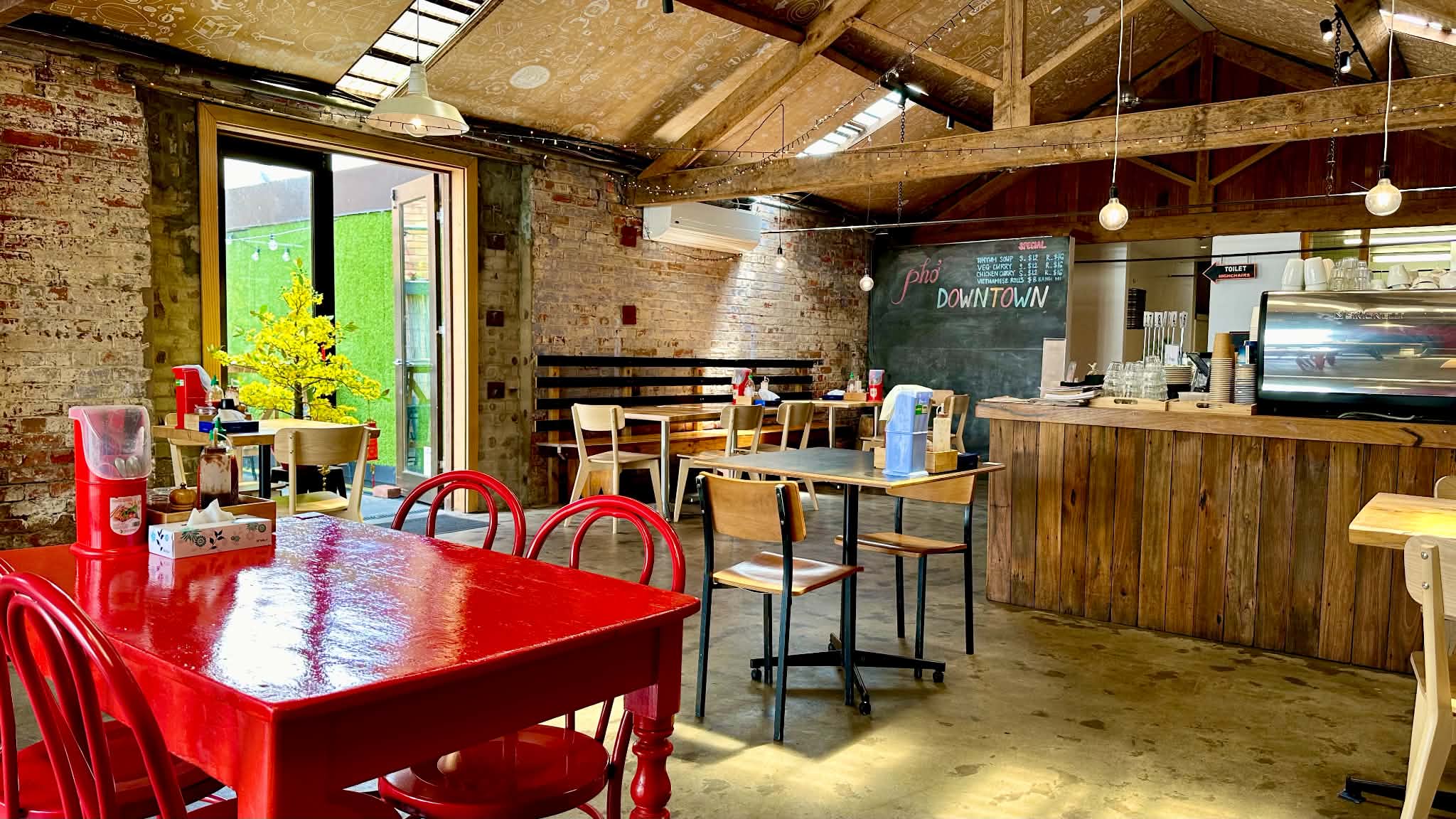
Inside, the room feels both rough and generous. Brick walls remain exposed. Heavy beams cross overhead. Drawings cover the ceiling. The red table near the entrance seems almost ceremonial.
The restaurant has not hidden the bones of the old room. It has simply made them hospitable.
A bowl of beef pho arrives with clear broth, sliced beef, spring onion and noodles beneath the surface. Alongside it comes a red plate of bean shoots, basil and lemon.
There is a small ritual to eating it.
First, taste the broth.
Then decide what it needs.
A few leaves. Some bean shoots. A squeeze of lemon. Perhaps sauce, perhaps not.
The meal asks for a little participation, but not too much. Most of the work has already been done, slowly and elsewhere.
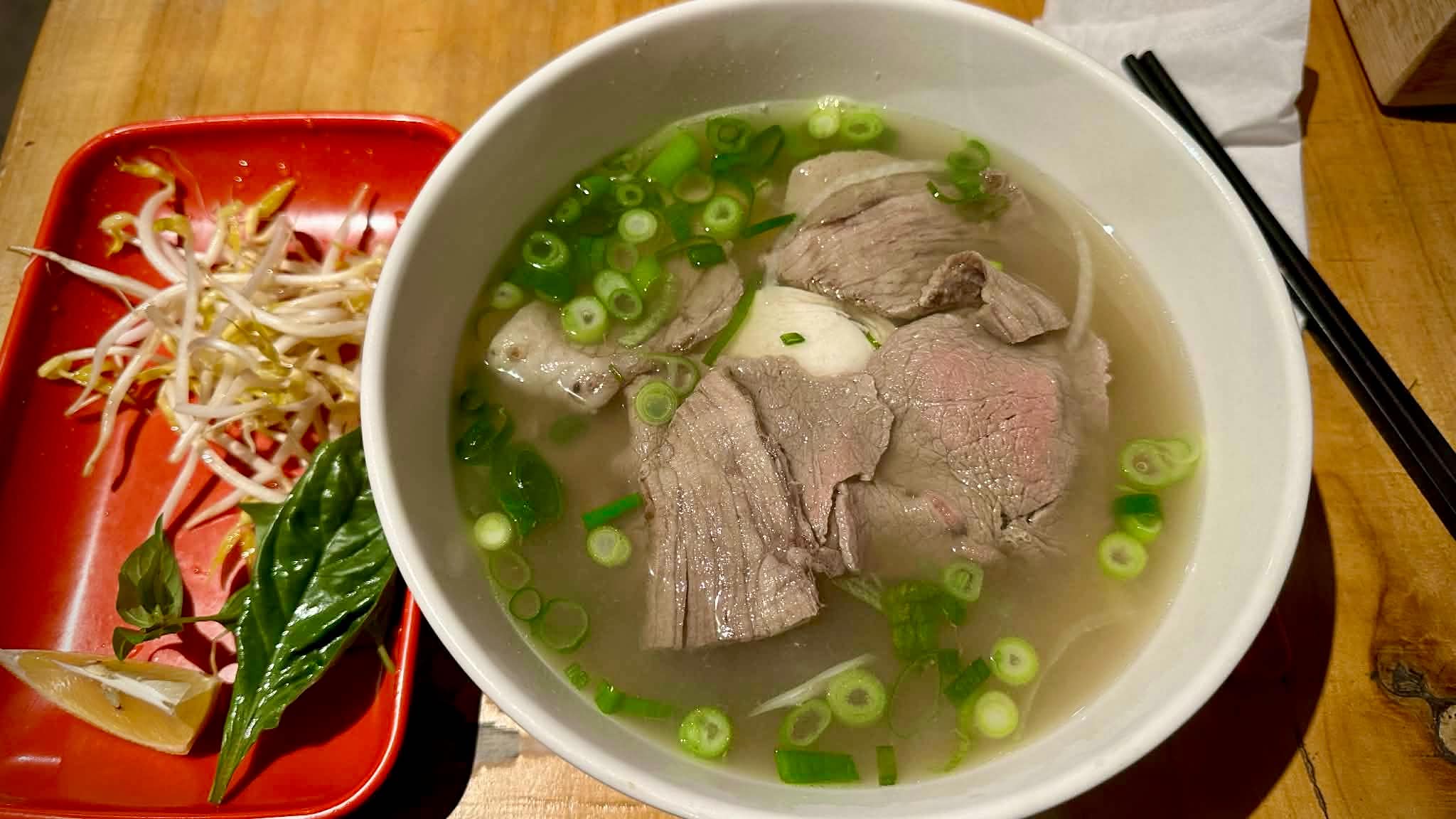
Pho is generous food without ceremony. It warms the hands before it warms anything else.
The room helps. Light catches the timber and the old brick. Conversation carries without becoming noise. People eat alone, in pairs, in families. No one appears in a hurry to turn the table.
This is not a restaurant that needs to make a spectacle of itself.
The pleasure is quieter than that.
A lane. A room. A bowl set down in front of you.
Sometimes that is enough.
WALK
Alleys, arcades and arts
A less direct way through central Geelong.
We left Pho Downtown, followed Warner Place north and crossed Ryrie Street towards James Street.
It is a short street, but it contains several ways of disappearing.
The first is on the left.
Large blue eyes look out from the entrance to Books Around. Arrows point down towards the books, as though a person might otherwise lose courage.
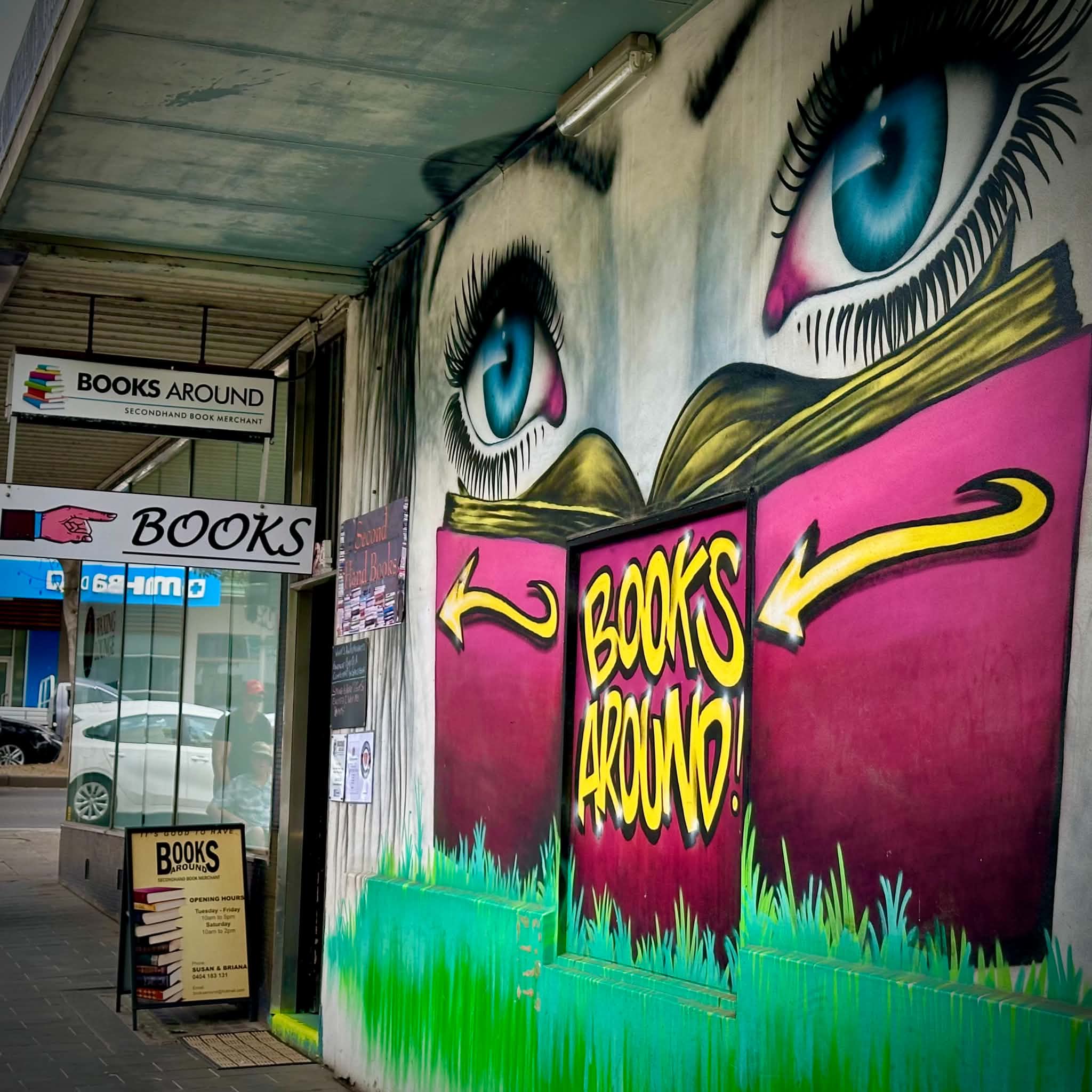
Below the pavement, the shop opens into a sequence of rooms.
The shelves are not arranged into one elegant interior. They have accumulated. So have the books. So have the chairs.
This is part of the pleasure.
One room gives way to another. Shelves turn corners. A floral armchair waits among thousands of volumes, looking as though someone has just stood up and may return at any moment.
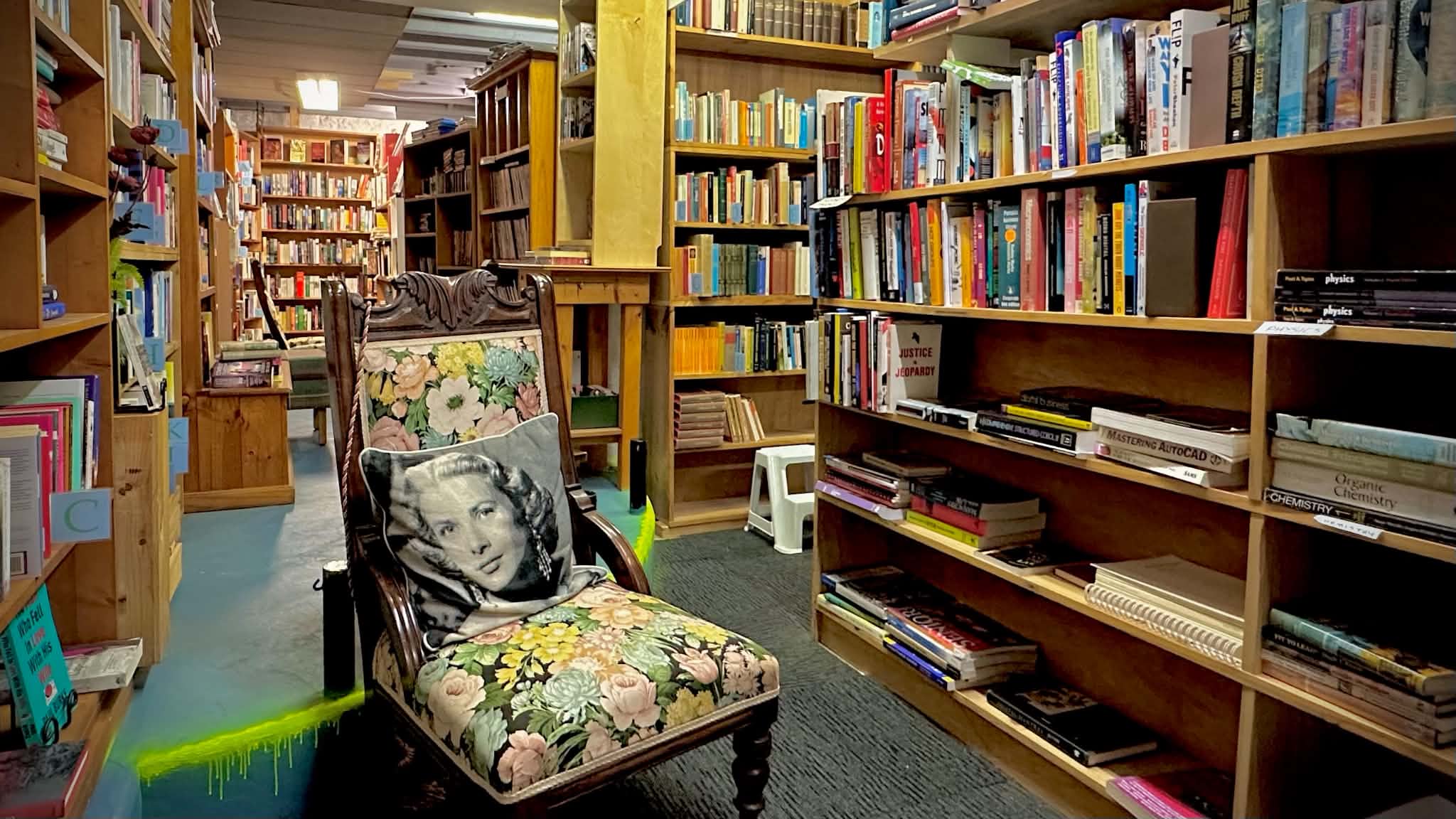
There are books on literature, history, science, travel, food and subjects that resist neat categories. Some are recent. Others have softened at the edges. A few still carry inscriptions from birthdays, Christmases and lives no longer attached to them.
A secondhand bookshop is one of the places where ownership becomes temporary.
The book was someone else’s. For a while, it may be yours.
Then perhaps it will move again.
Back in daylight, we continued north.
James Street does not reveal itself as a single attraction. Its interest gathers in pieces: a doorway, a painted wall, a small business, a room whose purpose is not immediately apparent.
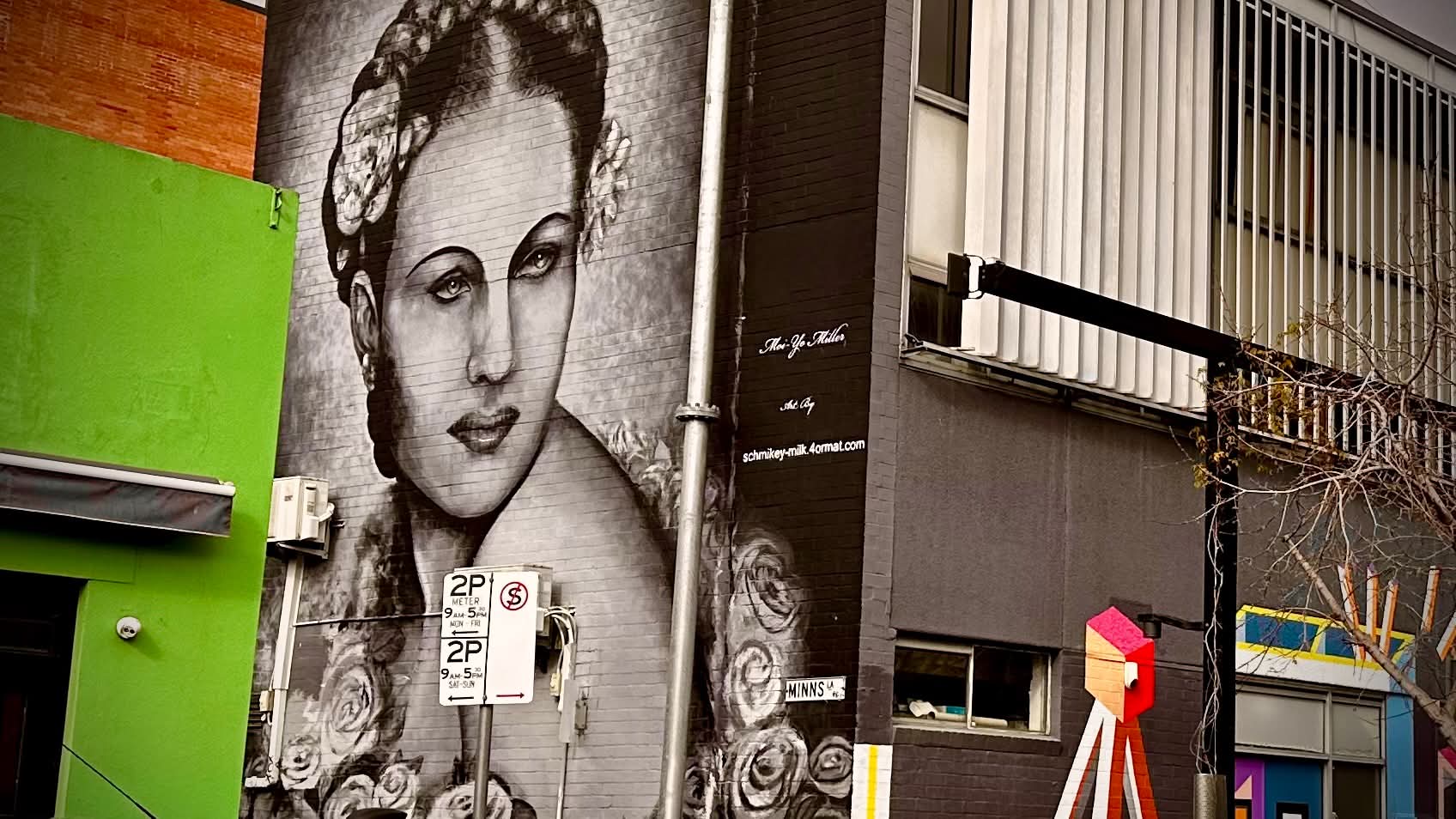
Minns Lane opens partway along.
A woman looks down from the brick wall. Her face is rendered in black and white, surrounded by roses. Bright green, pink and fragments of colour gather around her.
She seems to know where we are going.
We do not.
Beyond the lane, James Street continues past more shopfronts and small establishments before reaching Little Malop Street.
Near the northern end is James Street Gallery, a working place where artists make paintings, prints, ceramics, books and other forms. The street finishes much as it began: with people making use of rooms that might otherwise be easy to pass.
At Little Malop Street, we turned east and crossed Moorabool.
The city grew busier for a moment as we passed through the transport interchange. Then, a little further along, Centrepoint Arcade drew us inside.
Notice
The work behind the colour
From the street, Centrepoint looks layered rather than composed. The old Geelong News sign still hangs above. A tattoo studio, Creative Geelong, artists’ spaces and other small tenancies share the ageing frontage.
It does not present itself as a polished cultural precinct.
That may be why it feels alive.
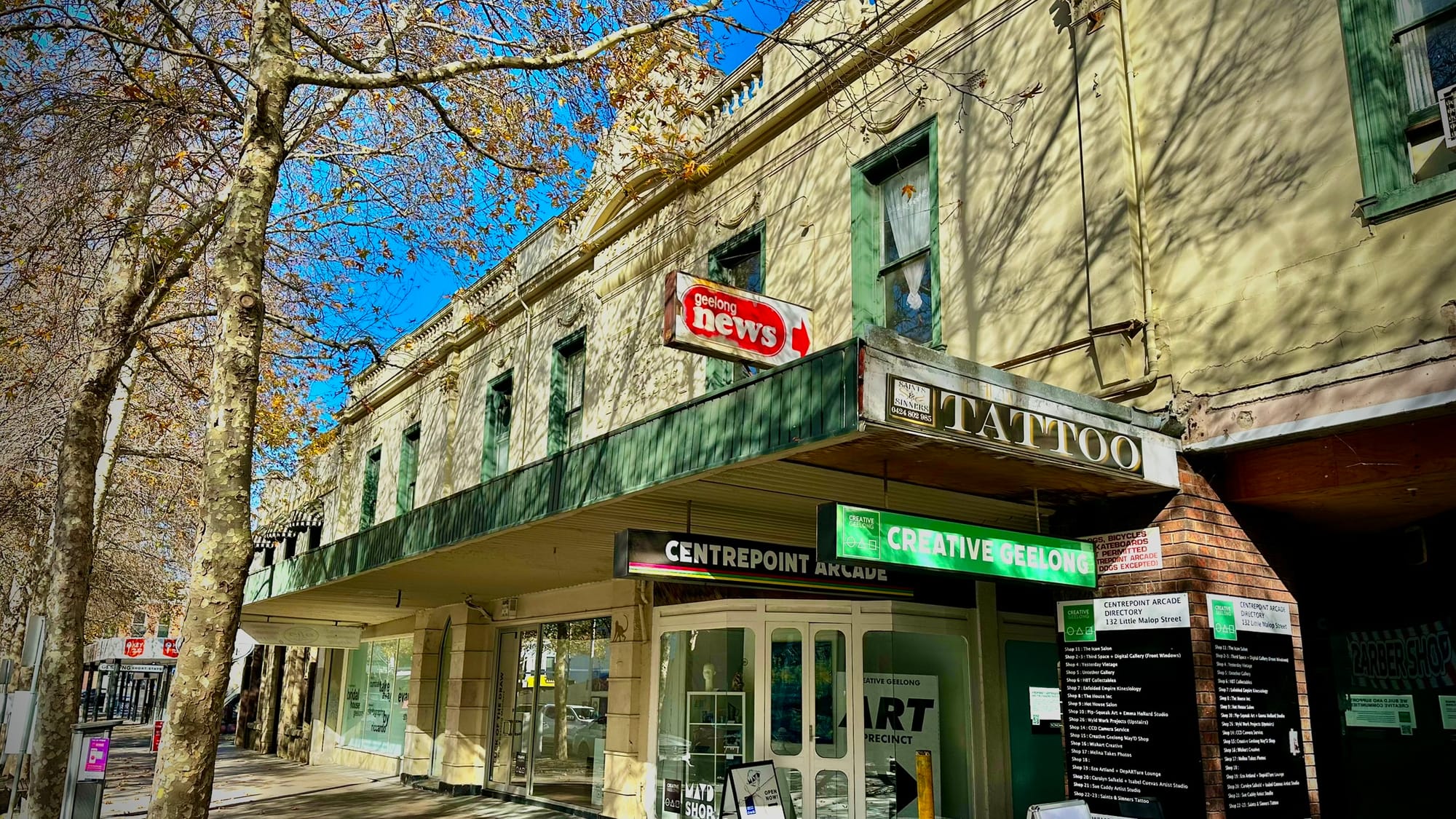
Creative Geelong has helped turn parts of the arcade into studios, galleries, shops and places where artists can work, show and sell.
The arcade remains a passage between two streets. People still use it simply to get somewhere else.
But partway through, the narrow passage opens.
The roof continues overhead, yet the space feels almost like a clearing. The light broadens. The floor spreads out around tables, shopfronts and the concrete stair rising through the centre.
After the compressed entrances and dimmer corridors, there is a small sense of arrival.
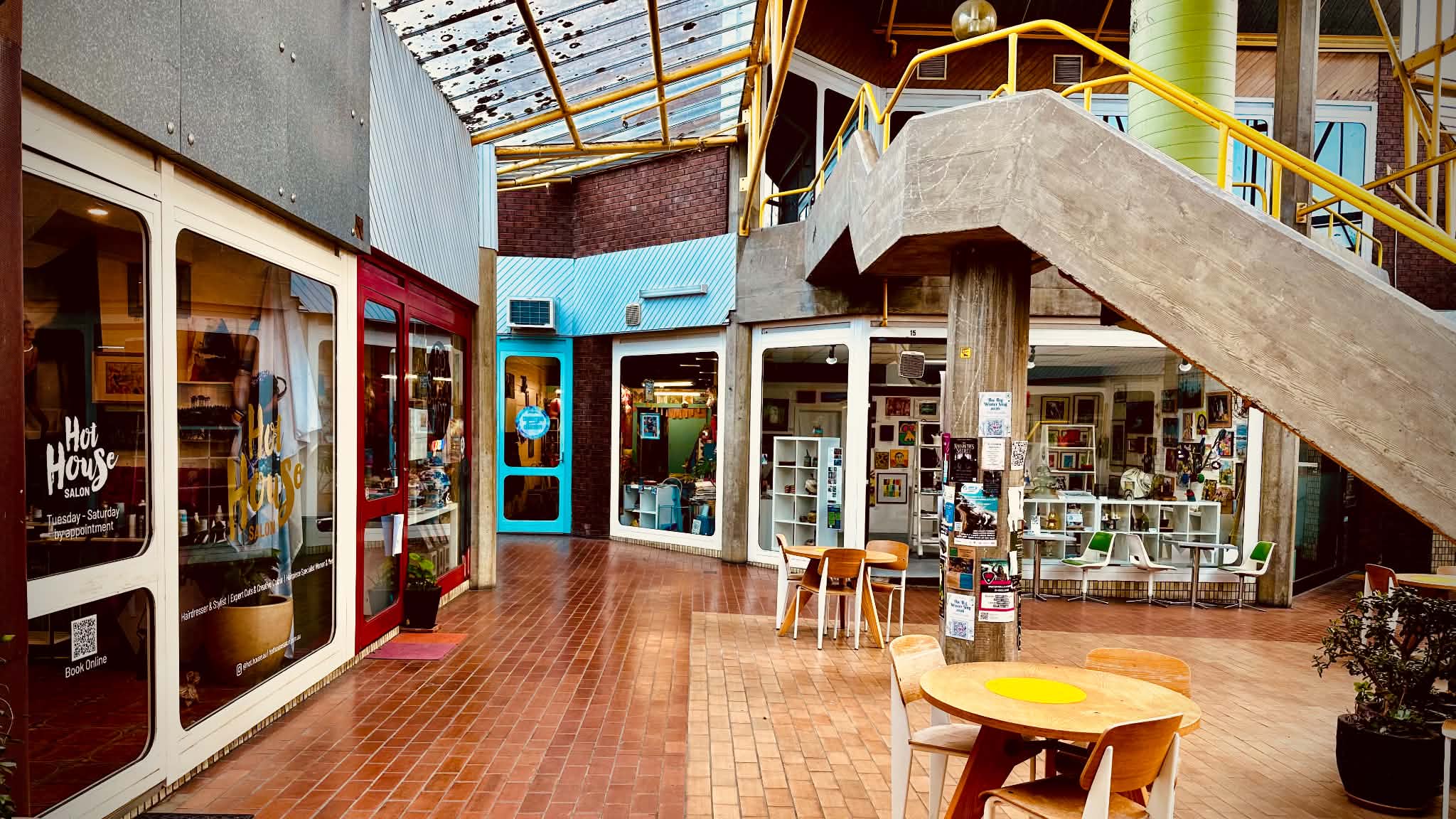
Creative Geelong occupies several of the rooms around this shared space. Through open doors and windows, you catch fragments of work in progress: paintings, ceramics, prints, textiles and objects whose purpose may not be immediately clear.
The precinct does not announce itself with the order or polish of a conventional gallery. Studios sit beside ordinary businesses. Signs, flyers, chairs and display shelves have accumulated. People make things in rooms that still carry traces of their earlier uses.
That is part of its character.
Creative life here is not separated from the daily movement of the arcade. Someone crosses the space on the way to Ryrie Street. Someone else pauses at a window. A conversation begins beside a table. A work leaves a studio and enters another person’s home.
About a year ago, a small painting by Ballarat artist Marg Primmer came home with us from Creative Geelong.
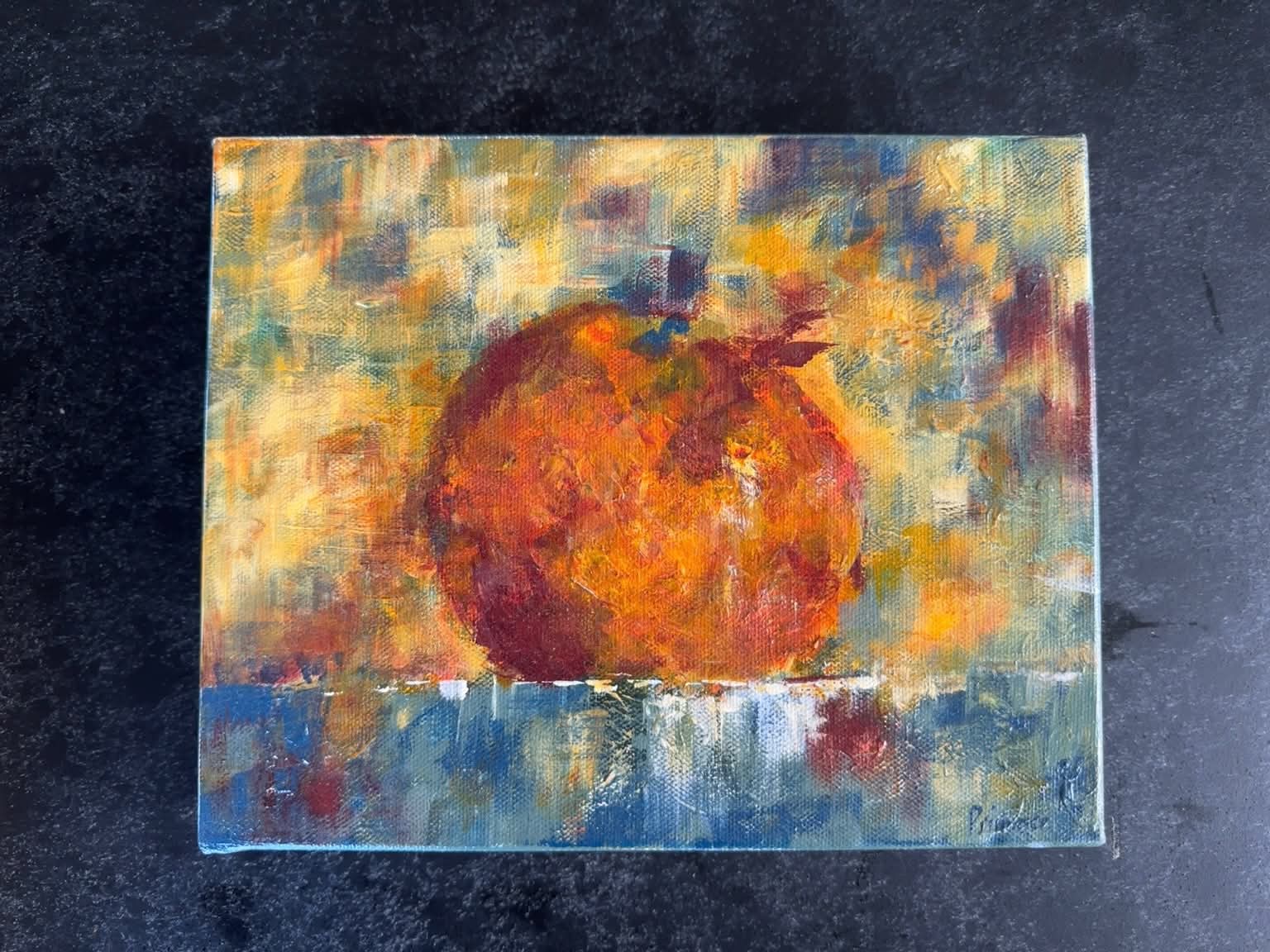
The work is built from orange, red, blue-grey and layered acrylic. Primmer’s paintings develop through colour, brushwork and palette knife. This one changes as the light moves across it.
Some days the orange comes forward.
On others, the blue holds the room.
That is one of the things a place like Centrepoint makes possible.
An artist makes a work. The work is shown somewhere accessible. Someone stops.
Then the painting leaves.
It becomes part of another room and another life.
Pip-Squeak and Vicki Clissold
At Pip-Squeak Art Gallery and Studio, the window is difficult to take in all at once.
A painted woman turns away from the arcade, absorbed in something beyond the frame. A blue-and-white vessel stands beside her. Small felt animals gather further inside.
Across the glass move the reflections of other shops, lights and people passing.
The artwork and the arcade briefly occupy the same surface.
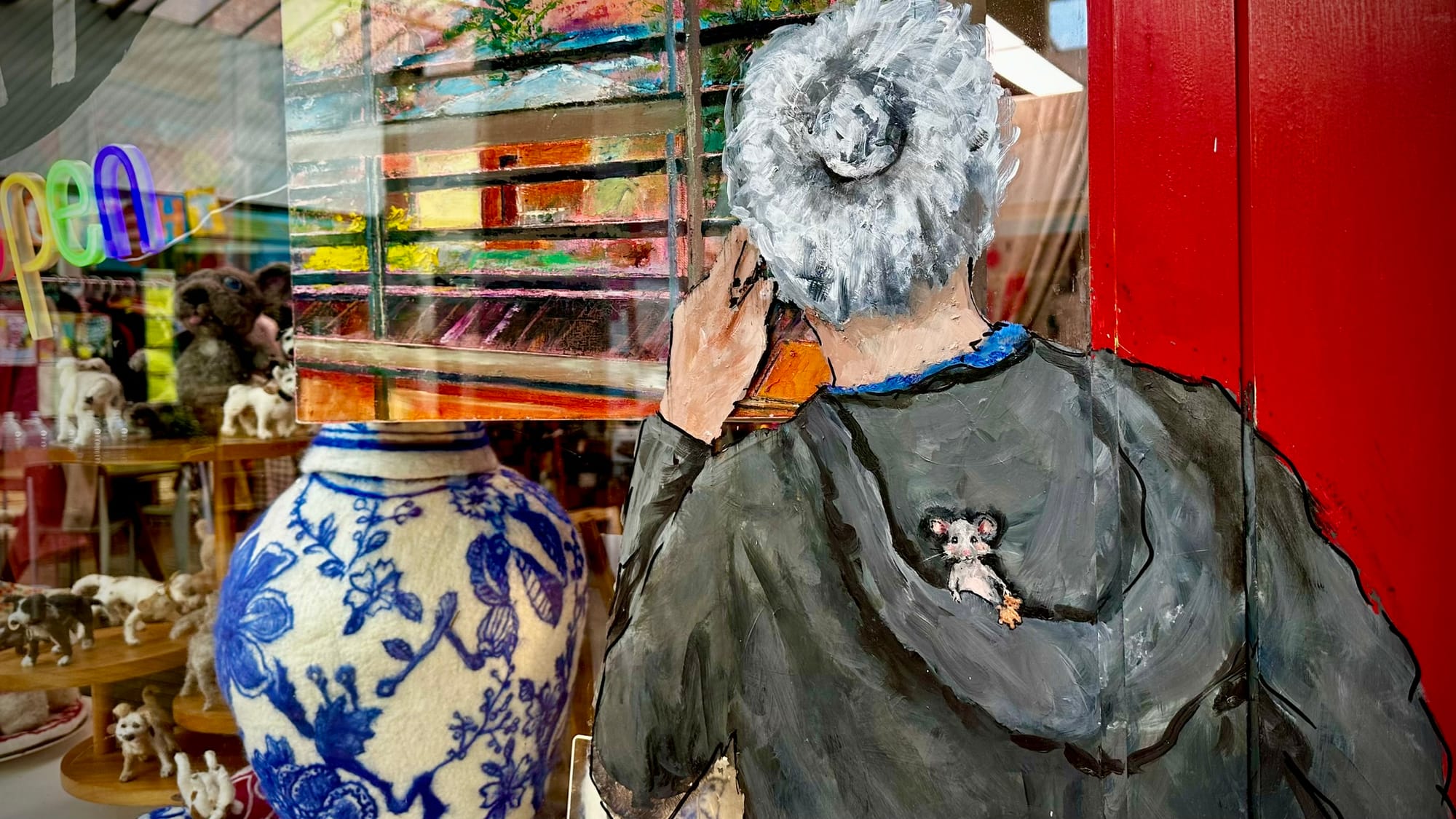
Pip-Squeak is the working studio of Vicki Lee Clissold.
Clissold paints, makes murals and creates soft felt sculpture. Her work often attends to streets, animals, community and the small encounters that animate public places.
But some of her work is less immediately visible.
She also helps conserve Geelong’s waterfront bollards.
We passed those painted figures in the first edition of The Geelong Letter, on the walk between Eastern Beach and Cunningham Pier. They appeared to belong naturally to the waterfront, standing among paths, lawns and views across the bay.
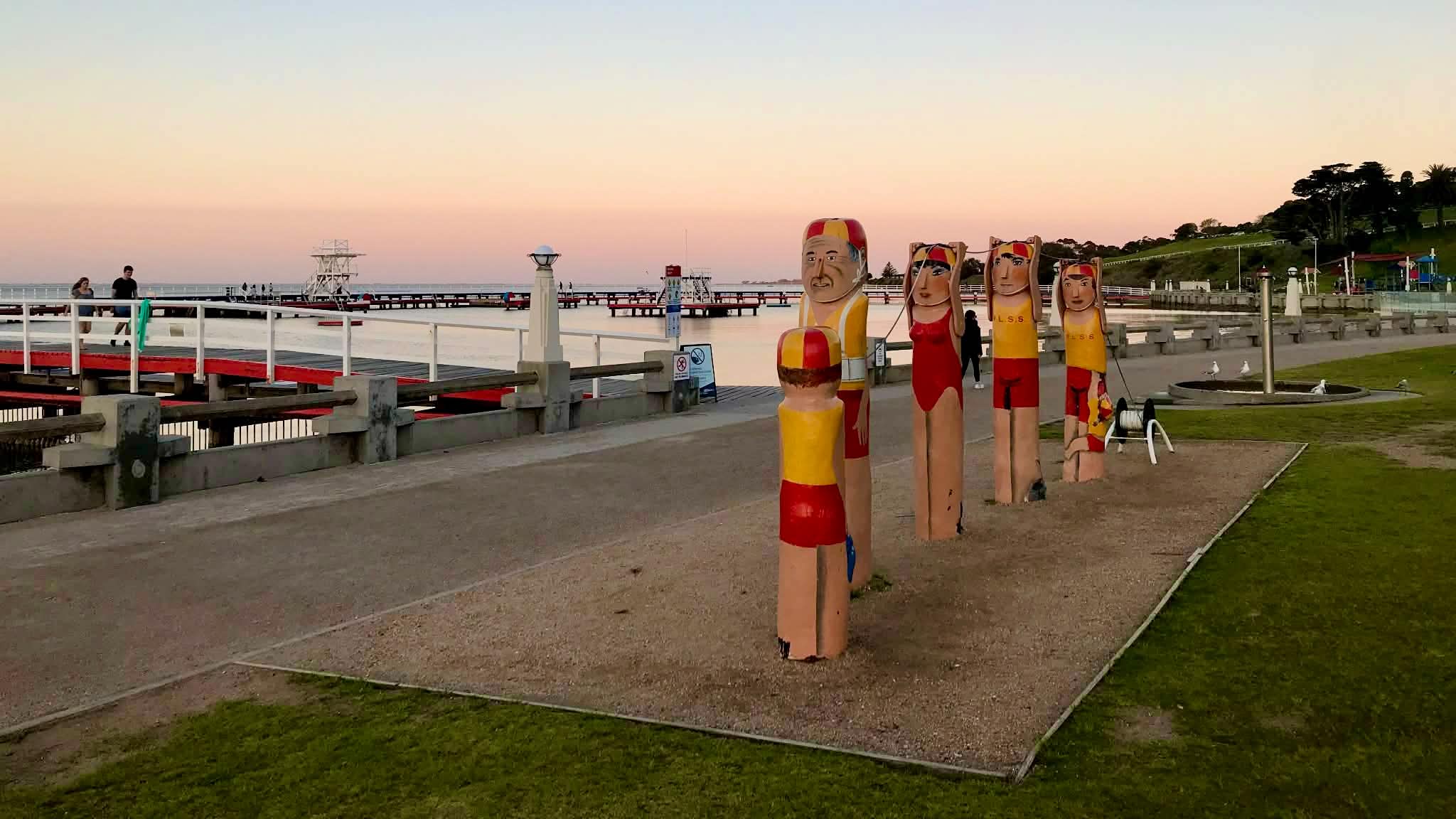
It is easy to forget that public art does not remain vivid by itself.
Paint fades. Timber moves. Sun, wind, rain and salt leave their marks. Someone must look closely enough to notice what is changing, then know how to intervene without erasing the character of the work.
That quieter labour connects this small arcade studio to the waterfront.
From Centrepoint, Clissold makes new work. Elsewhere, she helps care for work that has already become part of the city’s memory.
Creation and conservation are often spoken of as different instincts.
One begins something.
The other keeps it going.
But both require attention: to surface, colour, material and the life a work has once it leaves the studio.
Return to the window before moving on.
The painted woman still faces away.
The reflections have already changed.
The doors open at Creative Geelong
At ten on Saturday 15 August, the studios and shared spaces of Centrepoint Arcade open for Creative Geelong’s monthly market day.
On an ordinary day, the arcade can feel like a place encountered in fragments: a window, an open doorway, a glimpse of someone working beyond the glass. On market day, more of that life moves into view.
Artists and makers bring their work into the shared spaces. Studio doors open. Visitors can browse, ask questions and meet some of the people whose work gives the arcade its character.
The market runs from 10.00 am until 3.00 pm.
We emerged from Centrepoint onto Ryrie Street and turned west.
On the south side, another staircase appeared.
Green light ran along the walls. Records and posters crowded the stairwell. Jason went up first.
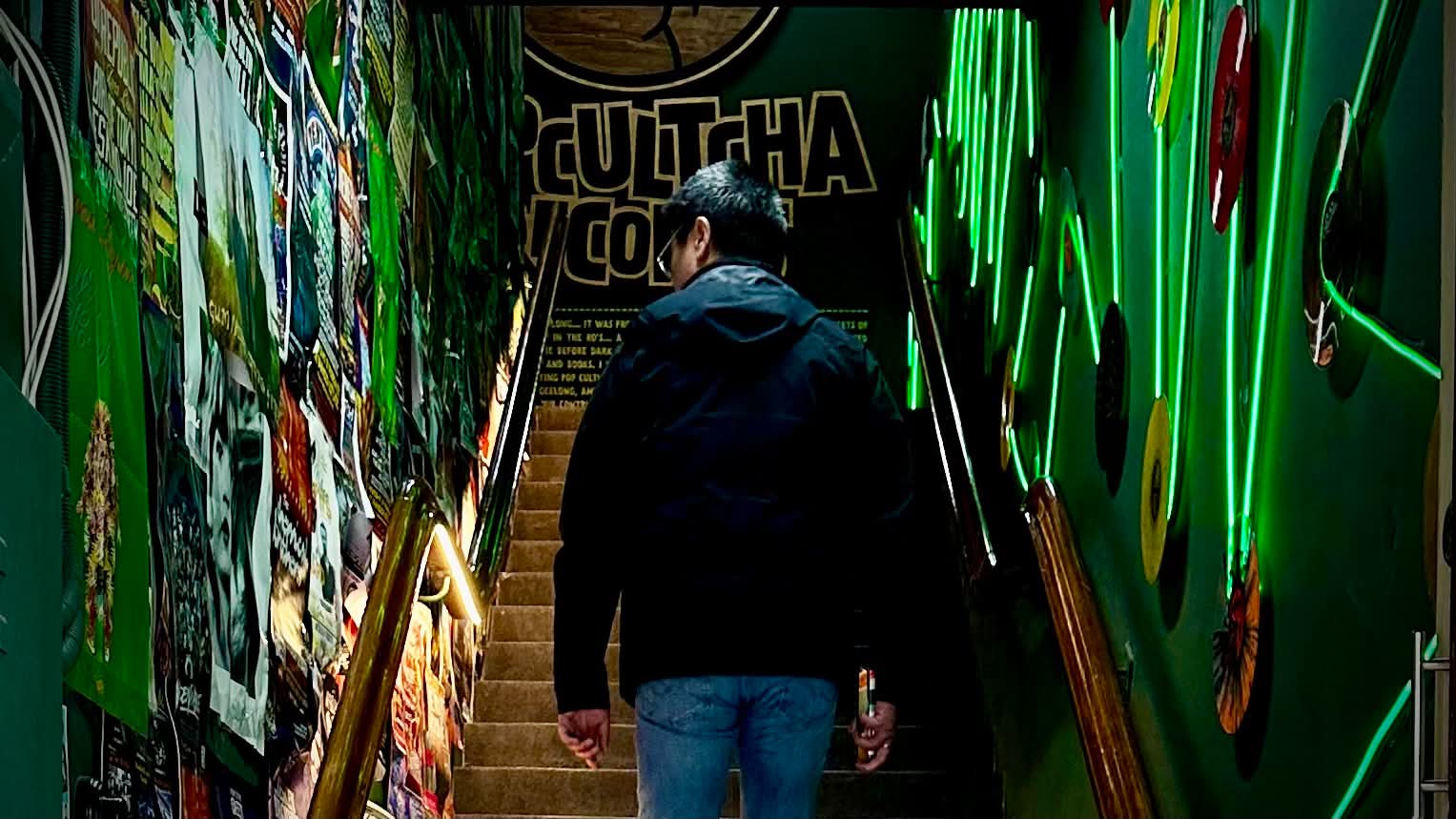
At the landing, Popcultcha Records described itself as a love letter to Geelong.
That felt right.
The shop is full of music, objects and memory. Old records sit beside new releases. Posters cover the walls. The staircase itself feels like the beginning of a gig that has not yet started.
Then we came back down.
Ryrie Street carried us west.
The road widened. The glass of Geelong Arts Centre caught the afternoon. Between the trees, the old stone appeared.
The last room on the walk had been waiting longer than the others.
Make Time For
The doors open at Church
At three on Saturday 15 August, another door opens further west along Ryrie Street.
Bless This Mess is Church’s free opening-weekend celebration, bringing Operation Karma, Blyss, Cooldad, Motel Neptune, Maddie Jackway and Will Gibb into the new room.
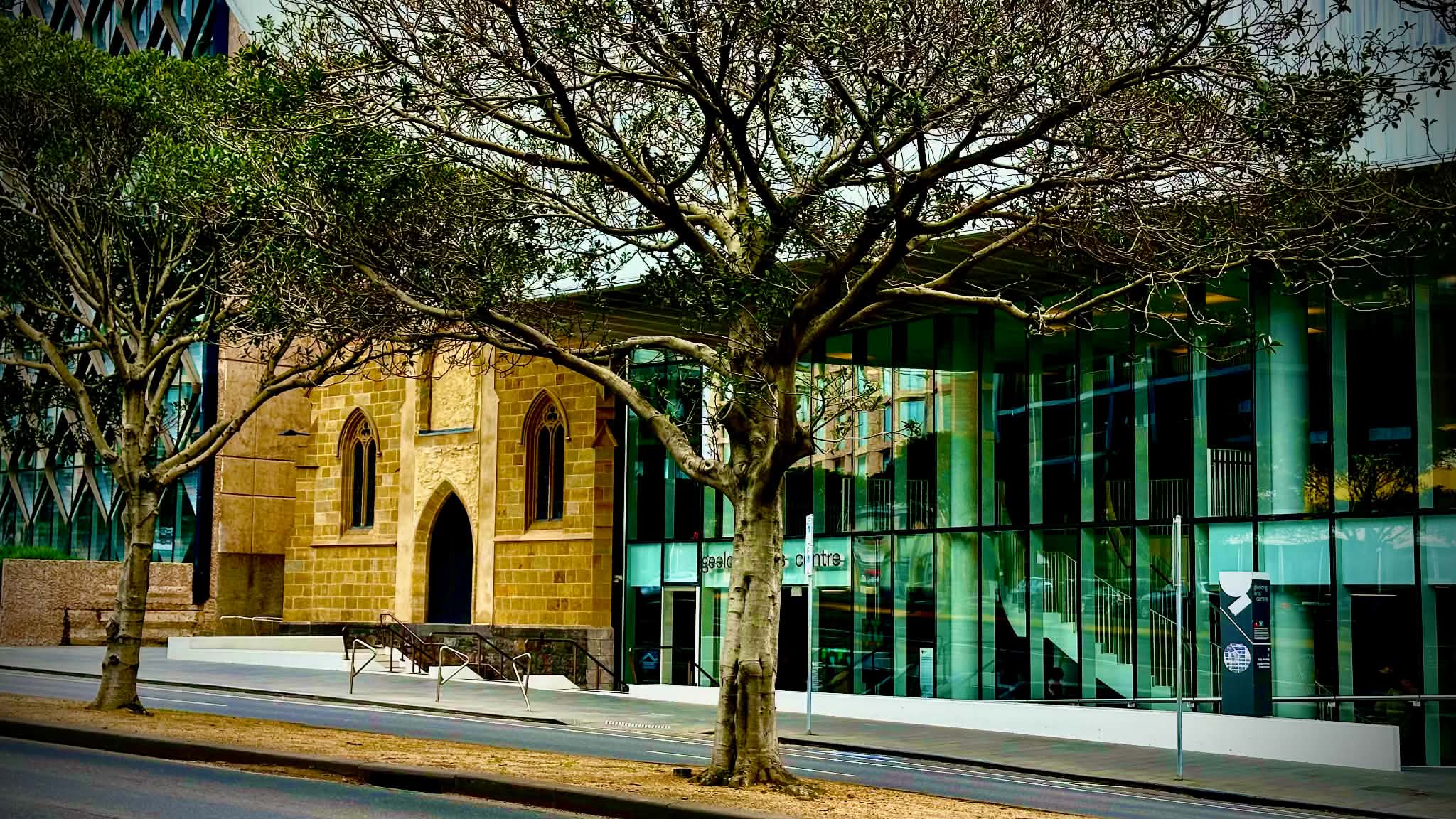
Creative Geelong’s market day and Bless This Mess form their own loose itinerary.
Begin at Centrepoint Arcade, where the market and open studios run from ten until three. Spend some time among the studios, market tables and work being made. Stop for something to eat, then follow Ryrie Street west towards Church.
There is no need to treat the day as a test of endurance.
Spend an hour at the market. Stay for one or two performers at Church. Leave room for the places between them.
The value lies less in completing everything than in seeing two different parts of Geelong’s creative life at work: one distributed through the rooms of an old arcade, the other gathering around a newly opened stage.
For one Saturday, the long way to Church becomes a day in itself.
GOOD TO KNOW
The long way to Church
Start: Pho Downtown, 7 Warner Place.
Finish: Church, 71 Ryrie Street.
Route: Leave Warner Place and head north towards James Street, where Books Around is worth a stop. Continue past Minns Lane, then turn east at Little Malop Street, cross Moorabool Street and make your way to Centrepoint Arcade. Walk through the arcade to Ryrie Street, then turn west. Popcultcha Records is upstairs at 96–98 Ryrie Street, on the south side. After a look around, cross back to the north side and continue west to Church at Geelong Arts Centre.
Distance: The route itself is compact, but allow considerably more time than the distance suggests if you intend to browse the bookshop, enter the arcade studios, look through records or stop for photographs.
Allow: Around 25–35 minutes for the uninterrupted walk. Allow two to three hours for the fuller version, including Pho Downtown, Books Around, Centrepoint Arcade and Popcultcha Records.
Surface: Predominantly sealed city footpaths and indoor arcade flooring, with several major street crossings.
Access: Books Around and Popcultcha Records are reached by stairs. Contact each business directly if step-free access is required. Centrepoint Arcade connects 132 Little Malop Street with 193 Ryrie Street.
Weather: Most of the route is sheltered by surrounding buildings, but Little Malop and Ryrie streets can still feel cold in winter. Centrepoint Arcade provides some cover, though not enough to treat the route as a continuous wet-weather walk.
Pho Downtown
Pho Downtown is tucked into Warner Place, a short lane between Ryrie and Little Malop streets. Its official website currently lists Vietnamese dishes including pho and bánh mì, along with coffee and other drinks.
Where: 7 Warner Place, Geelong.
Hours: Monday to Saturday, 10.30 am–9.00 pm; Sunday, 11.00 am–8.00 pm. Trading hours can change, so check directly before making a special trip.
Contact: (03) 5270 3991 or phodowntown07@gmail.com.
Ordering: The restaurant accepts dine-in and online orders. Check the current menu for prices and dietary information.
Access: Confirm step-free entry, bathroom access and seating arrangements directly with the restaurant if these are important to your visit.
Creative Geelong
Creative Geelong is a not-for-profit membership arts organisation based in Centrepoint Arcade. It provides studios, tenancies, exhibition spaces and programs for emerging and under-represented artists. Its current tenants span visual art, photography, vintage clothing, tattooing and other creative practices.
Where: Shop 15, Centrepoint Arcade, 132 Little Malop Street, Geelong. The arcade continues through to 193 Ryrie Street.
Market and open studios: Saturday 15 August, 10.00 am–3.00 pm. Creative Geelong lists markets and open studios on the third Saturday of each month.
Third Space: The public-facing window gallery can be viewed from the arcade at any time, including when the internal spaces are closed.
May’d Shop: Located at Shop 15 and devoted to work by Creative Geelong members. Check current opening hours before visiting.
Access: Individual studios and businesses keep their own hours and may have different access arrangements. Contact Creative Geelong directly if a particular space is central to your visit.
Church
Church is the new small-scale performance venue operated by Geelong Arts Centre at 71 Ryrie Street. The opening program begins on Friday 14 August with Teen Jesus & The Jean Teasers, supported by The Shore and Jasmin Adria. That performance is currently sold out, with a waitlist available.
Bless This Mess: Saturday 15 August, 3.00–10.00 pm.
Featuring: Operation Karma, Blyss, Cooldad, Motel Neptune, Maddie Jackway and Will Gibb.
Price: Free. No registration is required, but entry remains subject to capacity.
Age guidance: Licensed all-ages event, recommended for people aged 15 and over.
Set times: To be announced closer to the event.
Entry: Guests enter through the lane to the left of the stone church, before the adjoining glass-fronted building. The historic front doors are not used for public entry.
Access: Confirm accessible entry, seating, toilets, Companion Card arrangements and re-entry conditions with Church before attending.
Good timing: Creative Geelong’s market finishes at 3.00 pm, just as Bless This Mess begins. The walk from Centrepoint Arcade to Church is short, but free entry does not guarantee admission once the room reaches capacity.
Until next time
Thank you for reading the second edition of The Geelong Letter.
I hope something here gives you reason to leave the main street, take another staircase or look twice at a room you thought you already knew.
The quickest route may get us there sooner. It rarely tells us as much.
Until next time, Graeme.
